Innovate not imitate!

Innovate not imitate!
Interested in the latest Growth hacks?

Welcome to our blog

Interested in the latest Growth hacks?

Welcome to our blog!

We want to help you start/manage and grow your business using innovative strategies and implementation. We have a passion for helping businesses and companies of various sizes see the same success that we have achieved.

Our skillsets are wide and varied, from business strategy, marketing, to online strategy. An increasing number of companies are turning to the internet and online media as a means to maximising their marketing reach and exposure. This is special area of focus for us and we do more than simple SEO strategies.

See our website for more: www.innovatetoaccelerate.com

Monday, 6 May 2019

How AI is powering real-time SEO research: Insights and optimization

The shift to real-time data analysis and optimization has supercharged marketing in a way that frankly should have SEOs on the edge of their seats.

As organizations struggle to make sense of and activate their data, SEOs can combine their deep experience with massive amounts of data to make smarter business decisions and have an edge. Things are about to get real, very real.

Automation in marketing no doubt was (and still is) a game-changer for consultancies, agencies, and clients. Straight-up automation brought efficiency and order to the workflow. Now, you can expand your capabilities even further with the AI layer.

According to a study by the Economist, 75% of executives say AI will be “actively implemented” in companies within the next three years. Business leaders aren’t feeling so great about how it’s being implemented, though. Although 92% of C-level executives with some of the world’s biggest brands recently reported that the pace of their big data and AI investments are accelerating, 77% also said that business adoption of AI initiatives is a major challenge.

Where’s the disconnect? It’s telling that 93% of those interviewed identified people and process as obstacles. In this post, we’re going to explore the different ways SEOs can lead the charge in AI-powered insights and optimizations. We are entering a new era of real-time SEO and insights are being powered by machine learning and AI.

Understanding the opportunities in evolving SERPs

Google has gone all-in on AI, and it’s driving increasingly complex yet engaging and functional enhanced search results. With RankBrain, Google uses machine learning to analyze the context of content and serve more accurate organic search, image, and video results.

How does it work? Roger Rogerson dug up a succinct explanation in a recent column:

“… RankBrain uses artificial intelligence to embed vast amounts of written language into mathematical entities — called vectors — that the computer can understand. If RankBrain sees a word or phrase it isn’t familiar with, the machine can make a guess as to what words or phrases might have a similar meaning and filter the result accordingly, making it more effective at handling never-before-seen search queries. …”

– Greg Corrado, from Bloomberg’s: Google turning its lucrative web search over to AI machines

RankBrain isn’t just using natural language processing (NL) to better understand the intent behind each query. It’s converting words to data, plotting it on a chart, and examining the relationships that exist between terms. What it “learns” then drives rankings and different types of results in the blink of an eye for each new query.

How can you use this to your advantage?

  • Content optimization is more important than ever. The bar for quality is high, and Google needs to be able to see how each piece of content, whether text, image, or video is the best answer for specific types of queries. But optimizing content once, before it’s published, isn’t going to cut it anymore. SEOs need AI-powered automation to audit site content, resolve errors, and suggest new optimizations on an ongoing basis, based on real-time data, and consumer behaviors.
  • Automate competitive research and find opportunities to increase your share of voice with smart monitoring that identifies content that is outranking yours. See exactly where you need to build out content and what it needs to include in order to regain your rankings.
  • Stay ahead of SERP changes with AI-powered analysis. By the time you manually evaluate the SERPs that Google returns for even a few keyword phrases, you’re making optimizations based on old data. Get ahead of the game with real-time SEO insights that tell you exactly what you need to do to take over competitors on the terms that offer your greatest opportunities.

Making smarter optimizations with AI-powered insights

A typical SEO practitioner uses six separate tools cobbled together and spends four hours a day on research, reporting, and analysis. This is no longer necessary, though. BrightEdge Instant for example (disclosure, my company’s innovation) provides marketers with real-time recommendations and data so marketers take action to optimize content, all within one unified platform.
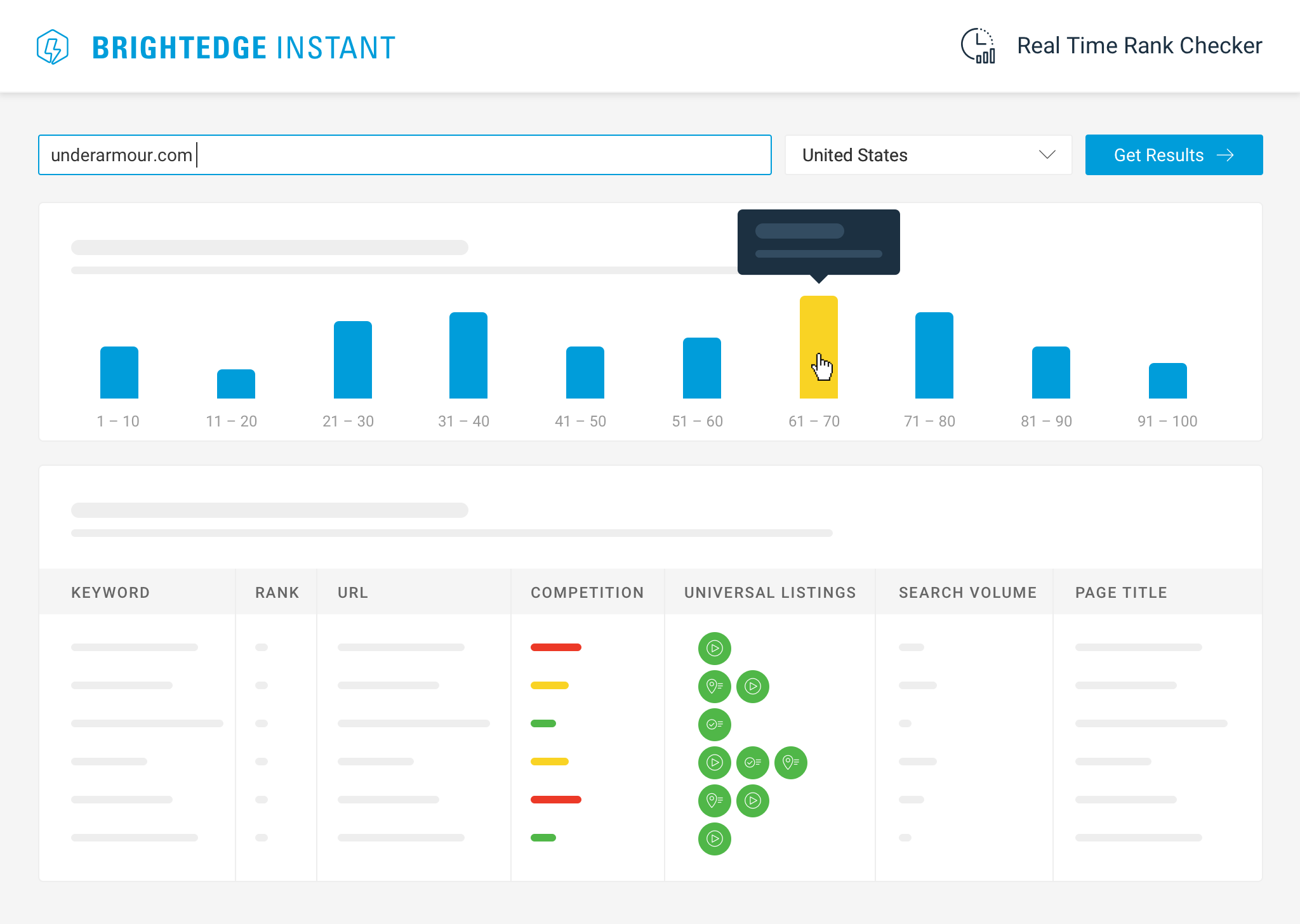
Screenshot of tracking page rankings using BrightEdge Instant's AI

Voice-enabled technologies, now used in more than 20% of mobile queries, are one opportunity you can’t afford to overlook. Amazon Alexa, Google Assistant, and other digital assistants rely on AI to converse with consumers and respond to their needs. You need to understand the conversational journey and the next three follow-up questions someone is going to ask but are probably wading through a list of keywords from Keyword Planner. You’re manually looking for conversational searches or turning to a point solution with display-only capabilities (without search volume) that is disconnected from your SEO workflow.

SEOs need to be able to analyze when and why people use voice search in order to provide the types of answers digital assistants can use. Structured data is a great way to achieve this, but right now more than 80% of the world’s data is unstructured (SEW offers a guide to help you get started here).

Keyword research is another opportunity to save time and improve performance by working AI into your workflow. Given the large proportion of queries that Google says have local intent, you need to understand the location for every part of your business worldwide. For businesses with hundreds of thousands of locations worldwide, it’s impossible to accurately research and report on keyword performance in each of your key markets. Using an AI-powered tool here allows you to scale research across thousands of locations and dozens of languages, all on one platform. You can make smart, high impact decisions that give you the competitive edge quickly and seamlessly, and this is without a mess of Excel sheets.

How can you use this to your advantage?

  • Make voice a reality by taking a data-driven, AI-enabled approach to understanding the conversations happening in your space. Doing so will help you identify top-of-the-funnel, awareness-generating question keywords, analyze the keyword landscape, and understand which portion of your keywords are quick answers, and which percentage you are winning.
  • Look for a tool that uses the power of AI to curate the most relevant topics and keywords to go after. Automation can exponentially amplify your efforts to evaluate a seed list, but it’s the AI layer that supercharges it by understanding intent, producing and evaluating a massive list of related terms in real-time, identifying current trends, and helping you to prioritize your efforts.
  • Don’t forget about video! YouTube is the second largest search engine in the world and consumers increasingly look there as part of their shopping process (especially in the early stages of their buying journey). Measuring video performance and rankings immediately and on an ongoing basis enables you to respond to real-time insights, and make optimizations to improve performance in the critical post-publication period.

SEOs cannot afford to be late adopters in the AI arena and laggards in relation to real-time SEO. Today, you need to be able to anticipate searcher needs and have technology in place to trigger the optimizations that will return your content as the top answer for relevant queries. Want to learn more? Make sure you caught my last column, Five ways SEOs can utilize data with insights, automation, and personalization.

Jim Yu is the founder and CEO of leading enterprise SEO and content performance platform BrightEdge. He can be found on Twitter @jimyu.

The post How AI is powering real-time SEO research: Insights and optimization appeared first on Search Engine Watch.


from SEO – Search Engine Watch http://bit.ly/2WnKpMQ
via IFTTT

Friday, 3 May 2019

The SEO metrics that really matter for your business

Whether you are a business owner, marketing manager or simply just interested in the world of ecommerce, you may be familiar with how a business can approach SEO.

To every person involved, the perception of SEO and its success can vary from a sophisticated technical grasp to a knowledge of the essentials.

At all levels, measurement and understanding of search data are crucial and different metrics will stand out; from rankings to the finer details of goals and page speed.

As you may know, you can’t rely solely on ranks as a method to track your progress. But there are other, simple ways to measure the impact of SEO on a business.

In a recent AMA on Reddit, Google’s own Gary Illyes recently urged SEO professionals to stick to the basics and this way of thinking can be applied to the measurement of organic search performance.

In this article, we will look to understand the best metrics for your business when it comes to understanding the impact of SEO, and how they can be viewed from a technical and commercial perspective. Before we start, it’s worth mentioning that this article has used Google’s own demo analytics account for screenshots. If you need further info to get to grips, check out this article, or access the demo version of Google Analytics.

Each of these are commercial SEO metrics — data that means something to everyone in a business.

Organic traffic

This is undoubtedly a simple, if not the most simple way of understanding the return of any SEO efforts. The day-to-day traffic from search engines is the key measure for many marketers and any increase can often be tied to an improved level of search visibility (excluding seasonal variation).

In a world where data drives decisions, these figures are pretty important and represent a key part of any internet user’s session, whether that is to get an answer, make a purchase or something else.

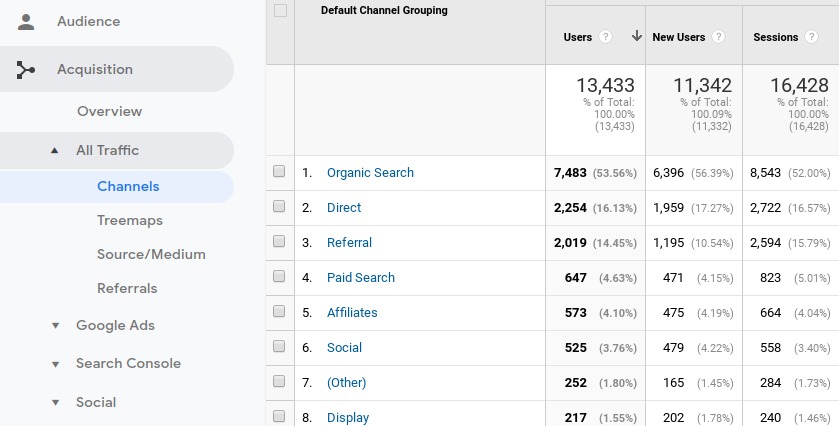
In Google Analytics, simply head follow this path: Acquisition -> All Traffic -> Channels to see the organic traffic received within your chosen time period

Identifying traffic sources in Google Analytics

You might be asking, “how can I know more?”

Google might have restricted access to keyword data back in 2011, but you can still dig down into your traffic from organic search to look at landing pages and locations.

Organic traffic data – Filtered by landing page 

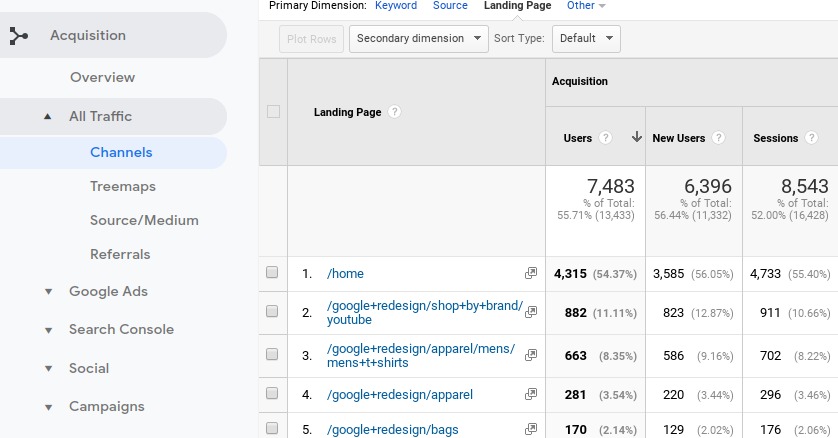
Not all traffic from search hits your homepage, some users head to your blog or to specific landing pages, depending on their needs. For some searches, however, like those for your company name, your homepage will be the most likely option.

To understand the split of traffic across your site, use the “Landing Page” primary dimension and explore the new data, split by specific page URL.

Understanding the traffic split using Google Analytics

Organic traffic data – Filtered by location

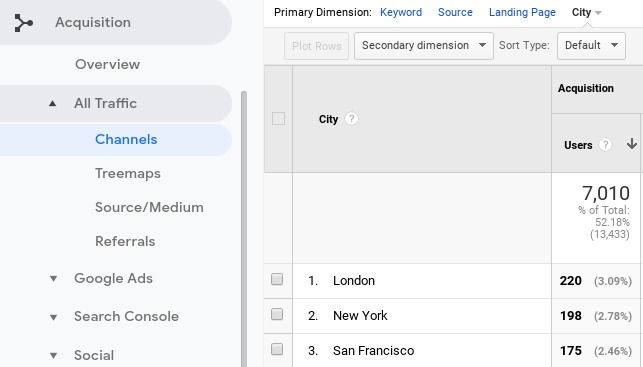
Within the same section, the organic search data can be split by location, such as city, to give even further detail on the makeup of your search traffic. Depending on how your business operates, the locations shown may be within the same country or across international locations. If you have spent time optimizing for audiences in specific areas, this view will be key to monitor overall performance.

Screenshot of search data filtered by city

Screenshot of the city wise breakdown of the search traffic in Google Analytics

Revenue, conversions, and goals

In most cases, your website is likely to be set up to draw conversions, whether that is product sales, document downloads, or leads.

Part of understanding the success of SEO, is the contribution to the goal of a business, whether that is monetary or lead-based.

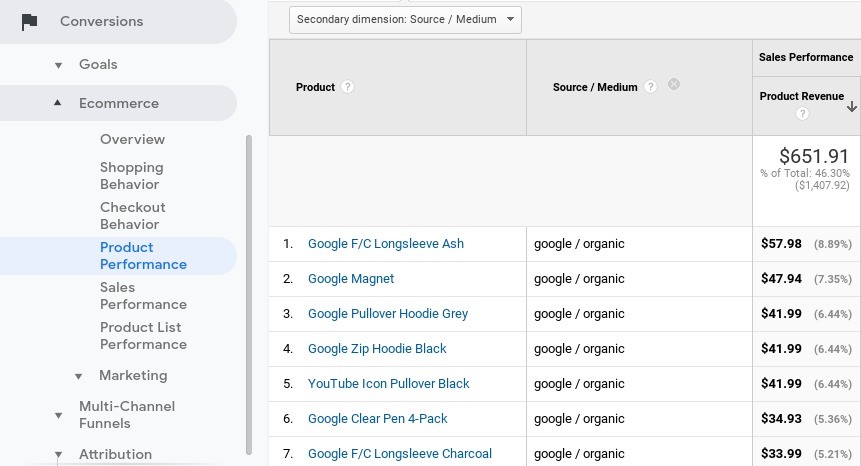
For revenue based data, head to the conversions section within Google analytics, then select the product performance. Within that section, filter the secondary dimension by source/medium to show just sales that originate from search engine traffic.

Screenshot of the product performance list to track search originated sales

If your aim isn’t totally revenue based, perhaps a signup form or some downloadable content, then custom analytics goals are your way of fully understanding the actions of visitors that originate from search engines.

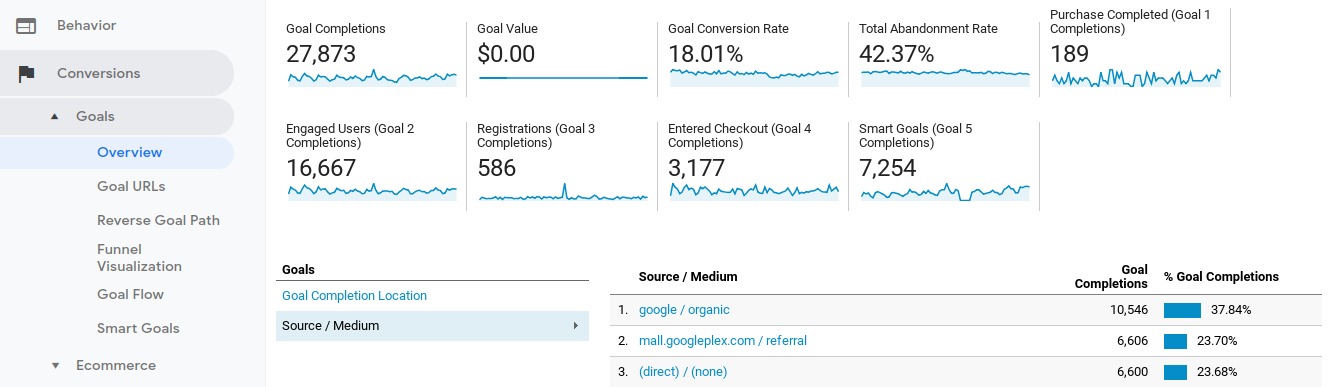
Within the conversions section, the source of your goal completions can be split by source, allowing you to focus on solely visits from organic search.

Graph on source wise split of goal conversions

If a visitor finds your site from a search and then buys something or registers their details, it really suggests you are visible to the right audience.

However, if you are getting consistent organic search visits with no further actions taken, that suggests the key terms you rank for, aren’t totally relevant to your website.

SEO efforts should focus on reaching the relevant audiences, you might rank #1 for a search query like “cat food” but if you only sell dog products, your optimization hasn’t quite worked.

Search and local visibility

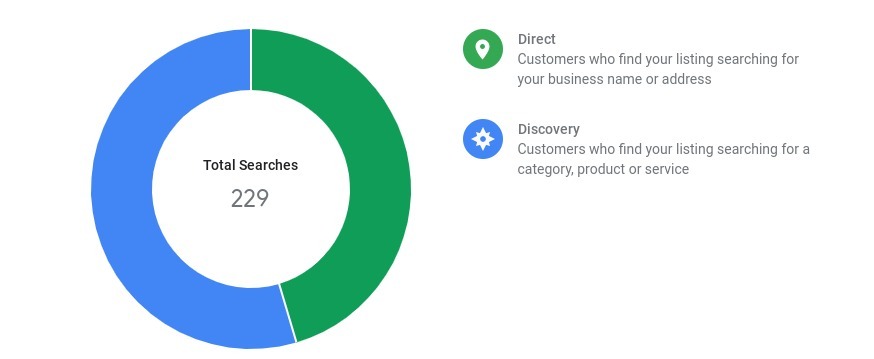
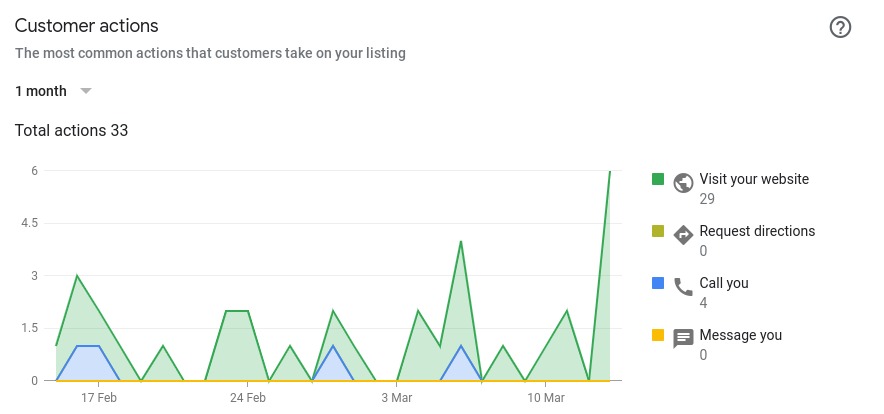
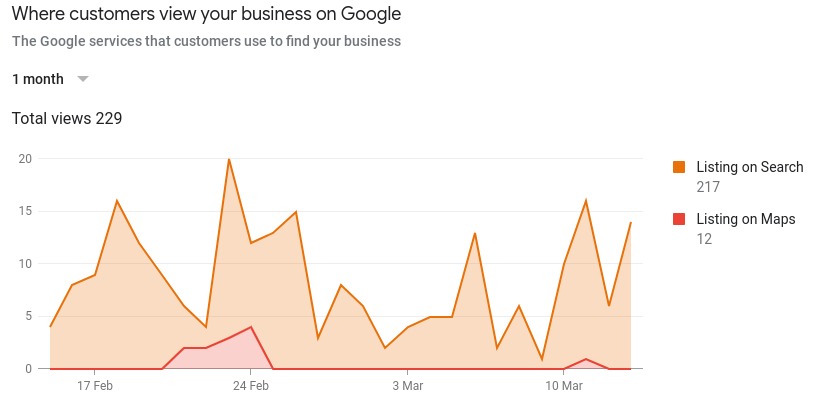
In the case that your business has web and/or physical store presences, you can use the tools within Google My Business to look further into and beyond the performance of the traditional blue links.
Specifically, you can understand the following:

  • How customers search for your business
  • How someone sees your business
  • What specific actions they take

The better your optimization, the more of these actions you will see, check these out!

Doughnut graph of search volume seen in Google Analytics

Graph of customer actions

Graph of listing sources for Google my business

Average search rankings

Rankings for your key terms on search engines have traditionally been an easy way to quickly get a view of overall performance. However, a “quick Google” can be hard to draw conclusions from. Personalized search from your history and location essentially skews average rank to a point where its use has been diminished.

A variety of tools can be used to get a handle on average rankings for specific terms. The free way to do this is through Google Search Console with freemium tools like SEMRush and Ahrefs, which also offer an ability to understand average rank distribution.

With search rankings becoming harder to accurately track, the measure of averages is the best way to understand how search ranking relates to and impacts the wider business.

Graph on average positioning of the website in search

Technical metrics – Important but not everyone pays attention to these

When it comes to the more technical side of measuring SEO, you have to peel back the layers and look beyond clicks and traffic. They help complete the wider picture of SEO performance, plus they can help uncover additional opportunities for progress.

Search index – Through search consoles and other tools

Ensuring that an accurate index of your website exists is one thing that you need to do with SEO. Because if only a part of your site or the wrong pages are indexed, then your overall performance will suffer.

Although a small part of overall SEO work, its arguably one of the most crucial.

One quick way is to enter the command “site:” followed by the URL of your site’s homepage, to see the total number of pages that exist in a search engine’s index.

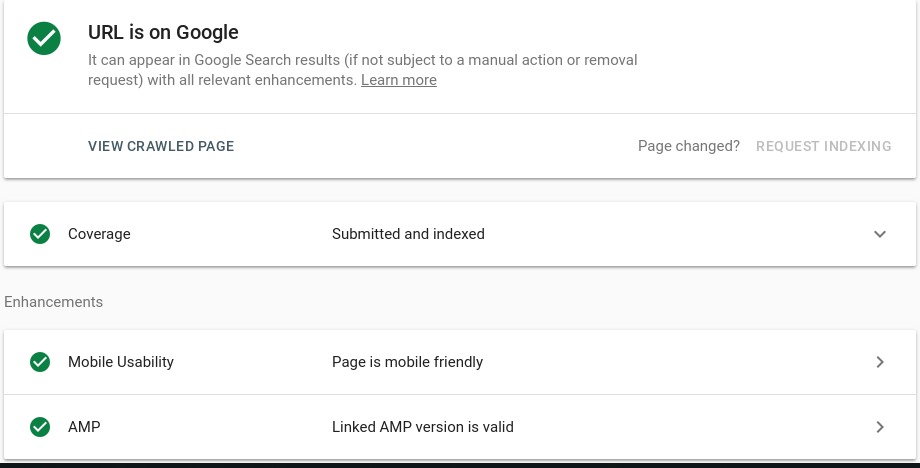
To inspect the status of a specific page on Google, the Google Search Console is your best option. The newest version of the search console provides a quick way to bring up results.

Screenshot of the latest Google Search Console

Search crawl errors

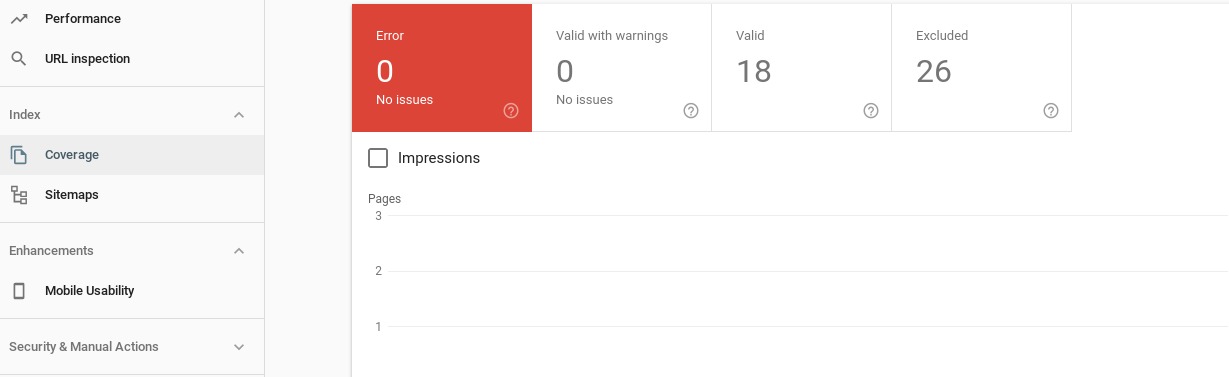
As well as looking at what has been indexed, any website owner needs to keep an eye out for what may be missing, or if there have been any crawl errors reported by Google. These often occur because a page has been blocked, or the format isn’t crawlable by Google.

Head to the “Coverage” tab within Google Search Console to understand the nature of any errors and what page the error relates to. If there’s a big zero, then you and your business naturally have nothing to worry about.

Screenshot of viewing error reports in Google Search Console

Click-through rate (CTR) and bounce rate

In addition to where and how your website ranks for searches, a metric to consider is how often your site listing is clicked in the SERPs. Essentially, this shows the percentage of impressions that result in a site visit.

This percentage indicates how relevant your listing is to the original query and how well your result ranks compared to your competitors.

If people like what they see and can easily find your website, then you’ll likely get a new site visit.

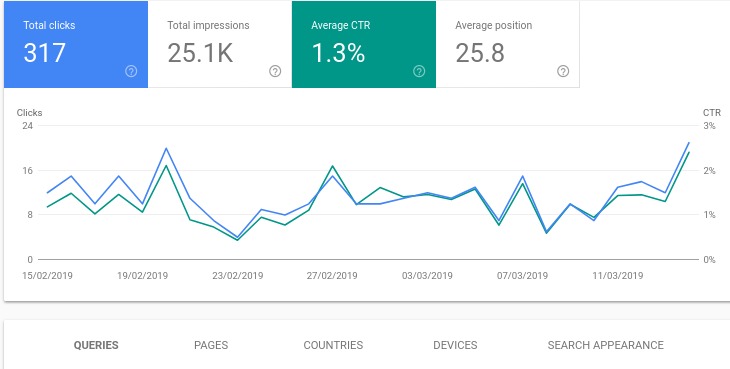
The Google Search Console is the best go-to resource again for the most accurate data. Just select the performance tab and toggle the CTR tab to browse data by query, landing page, country of origin, and device.

Screenshot of a CTR performance graph on the basis of query, landing page, country of origin, and device

If someone does venture onto your site, you will want to ensure the page they see, is relevant to their search, after all, search algorithms love to reward relevance! If the page doesn’t contain the information required or isn’t user-friendly, then it is likely the user will leave to find a better resource, without taking any action, known as a bounce.

In some cases, one visit may be all that is needed, therefore a bounce isn’t an issue. Make sure to view this metric in the wider context of what your business offers.

Mobile friendliness

Widely reported in 2015, was the unveiling of mobile-friendliness as a ranking factor. This is crucial to the evolution of browser behavior, with mobile traffic, often greater in volume than desktop for some sites.

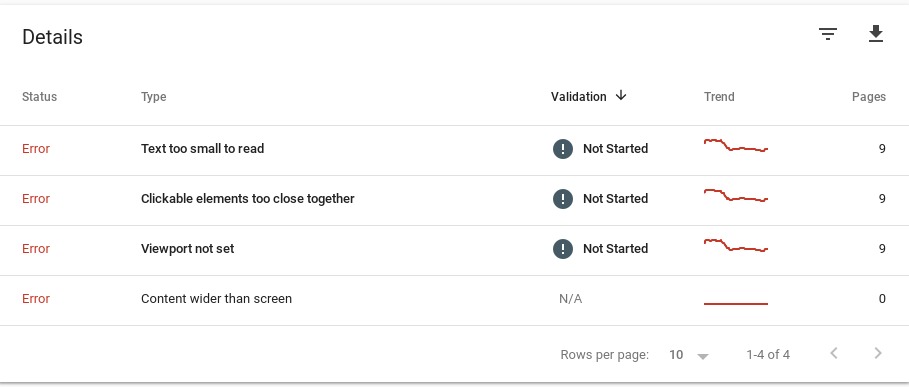
Another report in the ever useful Google Search Console gives a clear low-down of how mobile-friendly a site is, showing warnings for any issues. It’s worth saying, this measure isn’t an indication of how likely a conversion is, but more the quality of your site on a mobile device.

Graph for tracking the mobile-friendliness of a website

Follow your metrics and listen to the data

As mentioned at the start of this article, data drives decisions. In all areas of business, certain numbers will stand out. With SEO, a full understanding comes from multiple data points, with positives and negatives to be taken at every point of the journey.

Ultimately, it often comes down to traffic, ranks, and conversions, the numbers that definitely drive business are made up of the metrics that don’t often see the light of day but are just as important.

As a digital marketer, it is always a learning experience to know how data drives the evolution of a business and ultimately, how successes and opportunities are reported and understood.

Matthew Ramsay is Digital Marketing Manager at Digitaloft. 

Further reading:

The post The SEO metrics that really matter for your business appeared first on Search Engine Watch.


from SEO – Search Engine Watch http://bit.ly/2PJiPqI
via IFTTT

Google Ads Mistakes to Avoid - Whiteboard Friday

Thursday, 2 May 2019

Your 3-Step Guide to Creating a Successful Review Acquisition Strategy

Progressive web apps (PWAs) for SEO: Benefits, stats, examples

The last couple of years have made a few things very clear. If you have a business online, you need to make it your business to be mobile-first.

Second, your mobile experience needs to be smooth and frictionless if you want it to translate into dollars. Lastly, smartphone users are super fickle and despite downloading over 113 billion apps in 2018, users still regularly use only about 9 apps per day.

So, you need to be on mobile. You need to be awesome on mobile. And people are probably not going to download and use your app regularly. What do you do then?

Build something that combines the slick, user-friendly interface of a mobile app without actually creating an app.

Yes, I’m talking about progressive web apps or PWAs.

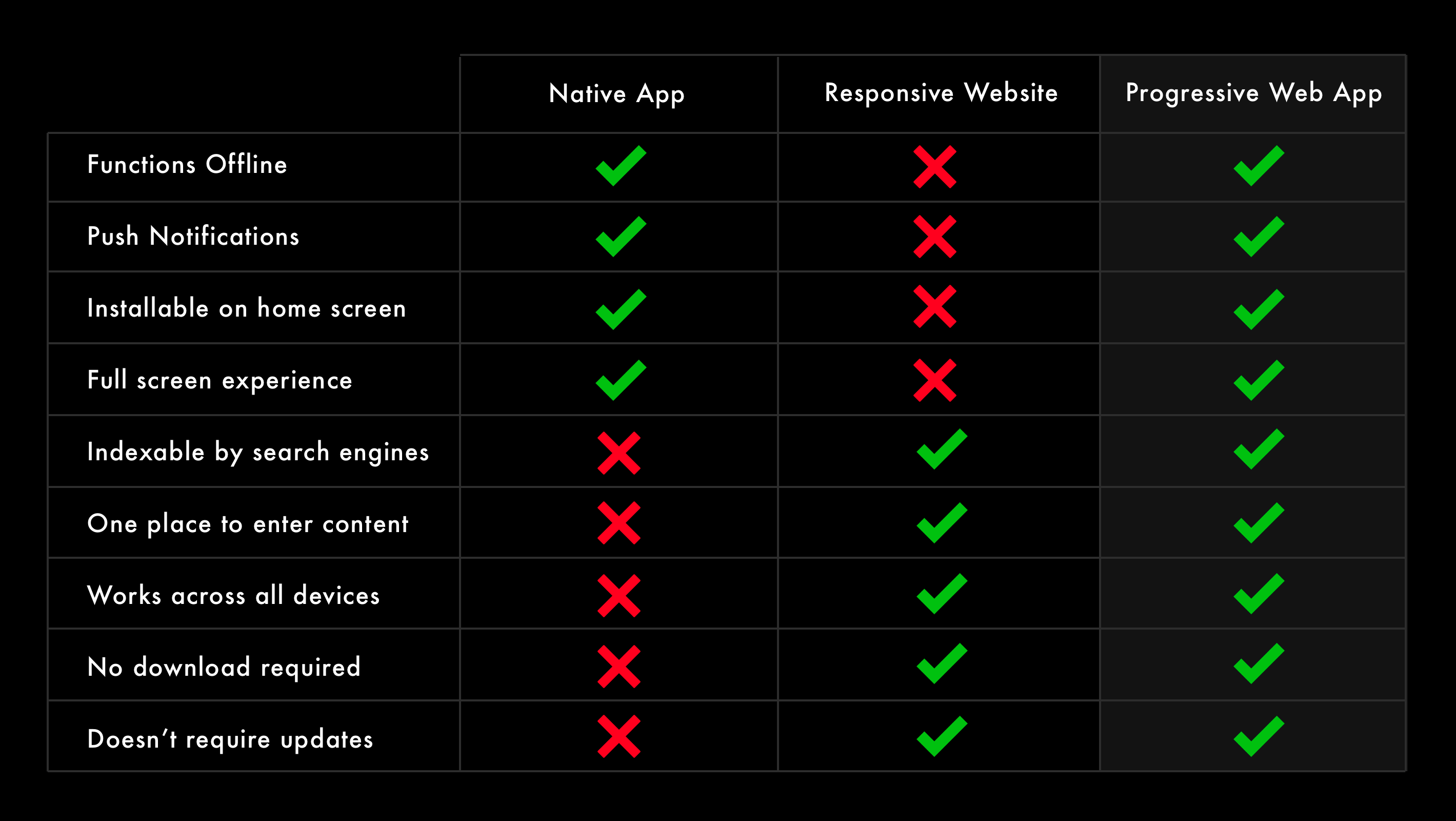
In the simplest possible words, a PWA is a mobile-friendly website that behaves like an app but doesn’t need to be downloaded to be used. Users have the option to save a PWA to their phone and launch it just like an app, but it’s totally optional.

Screenshot example of how Starbucks used a progressive web app

There are a whole host of perks that PWAs bring with them while overcoming the inherent disadvantages of building and maintaining a mobile site and a mobile app simultaneously. Let’s take a deeper dive to see how you can get the most out of PWAs.

Speed, thy name is PWA

This is undoubtedly one of the most exciting features of PWAs. Businesses can target users who might be on a slow data connection or even those who are offline with a PWA by using mobile development best practices like caching content ahead of time, compression, and more.

Why should you care about site speed? Because it directly impacts your SEO and your conversion rate.

In January 2018, Google formally announced what many SEO experts suspected for a while that mobile speed would be a key factor in organic search rankings for websites. With that came the mad rush to mobile optimize websites, improve page load times, improve navigation, and the works. In the case of PWAs, pages load instantly due to pre-caching and allow users a quick and simple user experience. A definite SEO win.

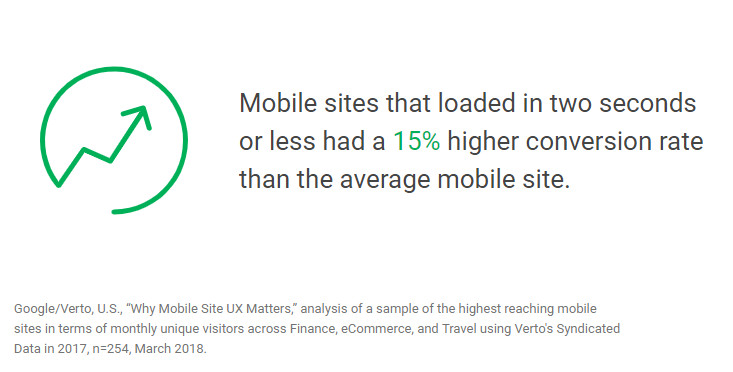
Research has shown over time that there is a correlation between site speed and conversion rates. A drop in site speed usually leads to a corresponding drop in conversion rates and vice versa.

Think with Google's stats on site speed and conversions

Source: Think with Google

Comparitive chart of PWAs vs native apps vs responsive websites

Source: One North

Websites can enjoy vastly improved conversion rates with the faster page load times that PWAs offer. Cosmetics giant Lancome switched to a PWA in 2017 and saw a significant improvement in both speed and conversion rates. They experienced an 84% drop in time until the page is interactive and a 17% growth in conversion rates.

Better engagement

Google dictates the fundamental requirements that a website needs to fulfill to qualify as a progressive web app. A smooth user experience including easy navigation, timely push notifications, cross-browser compatibility, responsive pages across all devices are a few important requirements that also lead to a growth in engagement.

PWAs mimic real mobile apps by allowing users to install them on their devices. With the app now on their mobile phones, the chances of interaction and engagement become exponentially higher, as experienced by Forbes magazine when they launched their own PWA. Users were notified every time new content was available via push notifications. With lightning-fast page load times, quick transitions and light page design, Forbes’ PWA managed to achieve the following:

  • Increase scroll depth by 3x
  • Improve sessions per user by 43%
  • Get a 6x increase in readers completing articles
  • Double their engagement rate which means a 100% increase in engagement

In the case of a publishing site like Forbes, high engagement equals high conversions, all thanks to their new PWA.

We know that website engagement metrics like session duration, click-through rates, and bounce rates have a direct impact on search rankings. As Larry Kim demonstrates here, time on site has a definite correlation with your organic search rankings. The higher the session duration, the higher your likely ranking on Google.

Source: Medium

You can say hello to page one on Google, all thanks to PWAs and their superior website engagement rates.

It’s all about the URLs

Progressive web apps truly embrace SEO best practices in every sense of the term. From clear and concise meta descriptions to adding Schema.org data for better indexing and parsing of site data by search bots; a search-optimized website is more likely to make the PWA cut than others.

PWAs don’t require different “mobile.site.com” types of URLs to offer a great experience on mobile devices. They’re automatically configured to provide a consistent experience, no matter what the device. Another bonus is that PWAs are necessarily HTTPS enabled. Not only does this bump up your site on organic search results but also reassures users about the security on your site leading to lower bounce rates, higher click rates, and likely higher conversion rates.

Each page comes with its own unique URL, making even deeply embedded pages easily crawlable and discoverable by search engines. Unique URLs for each page also makes sharing pages on social media and other sites much easier, not to mention more transparently trackable.

With pre-caching in place using service workers, all URLs on PWAs load even when your device is offline, empowering users who operate on older devices or poor network connections.

In closing

As users evolve and express their preferences more clearly, it is up to businesses to ensure that they pick up on these signals and adapt to stay relevant to their target audience. Today’s user is telling us that they expect a fast and frictionless journey on their mobile devices, without being forced to download an app for this superior user experience.

Time to pick up on those cues and invest in PWAs that combine ease of the mobile web with the speed and user-friendliness of a mobile app. Two for the price of one is what you get with PWAs. So when are you going to build yours?

Rohan Ayyar is Regional Marketing Manager at SEMrush. He can be found on Twitter @searchrook.

The post Progressive web apps (PWAs) for SEO: Benefits, stats, examples appeared first on Search Engine Watch.


from SEO – Search Engine Watch http://bit.ly/2PKc3B5
via IFTTT

Wednesday, 1 May 2019

Announcing the New Moz SEO Essentials Certificate: What It Is & How to Get Certified

Posted by BrianChilds

“Does Moz offer a certification?”

Educating the marketing community about SEO is one of our core values here at Moz. I worked at an agency prior to joining the team back in 2016, and much of what I learned about how to deliver SEO to our clients came from reading the Moz Blog and watching MozCon videos.

In 2016, one of Moz’s entrepreneurial product managers, Rachel Moore, launched a new catalog of SEO coursework called Moz Academy. This initiative enabled our community to learn faster through structured, interactive workshops. Since 2017, the team has taught SEO to almost 2,500 students through our various class offerings (I looked it up prior to writing this. That number made me really proud).

Across all these interactions, one question asked by our students kept surfacing: 

Can I get a certificate for completing this coursework? 

For agencies, the ability to show a certificate of completion is a way to differentiate themselves amongst a crowded market. I knew from my own experience how valuable having “HubSpot Inbound Certified” and “Adwords Certified” on my LinkedIn profile was — they allowed our team to show proficiency to our prospective clients. For our friends working as in-house marketers, showing a certificate of completion is a way of showing that the student made good on the investment they requested from their managers.

I’m proud to announce that Moz has put in a tremendous amount of effort to create a certificate program that meets this consistent customer demand. Today, Moz is launching the SEO Essentials Certificate through our Moz Academy platform. Check it out below:

I'm ready to check it out!

What is an SEO Certificate?

An SEO Certificate from Moz is all about developing familiarization with Moz tools and covering some of the essential types of projects you can use to hit the ground running. Though attendees of the Moz Academy come from a variety of backgrounds, we built the certification coursework with an Agency or freelance SEO in mind. However, I believe this material is valuable for anyone interested in learning SEO.

The certificate is focused on five core competency areas:

  1. Understand the Fundamentals
  2. Develop Keyword Strategies
  3. Apply On-Page Optimization Strategies
  4. Build Effective Link Strategies
  5. Create Efficient Reporting Strategies

By completing this certificate, attendees should be able to articulate for their stakeholders where SEO fits in a digital strategy, how to find and target search engine results pages (SERPs) based on the competitive landscape, and how to approach delivering basic SEO tactics using the Moz toolset.

With this foundation, you'll be able to jump off into more advanced topics such as technical SEO fixes, local SEO, and how to set up your agency for success.

Check out just what's included in the coursework for the Moz SEO Essentials certificate:

1. Understand the Fundamentals

One challenge we observed in the development of SEO coursework: our users often started delivering organic traffic improvements without having a foundational understanding of where SEO tactics fit into a broader digital strategy. Often people will initiate optimization efforts without first conducting effective keyword research. Or, if keyword research was being done, it wasn’t framed within a repeatable, scalable process.

The Understand the Fundamentals course sets the stage for delivering SEO in a way that can be repeated efficiently. In addition to defining essential terminology used in the following classes, you learn how to organize keyword research in a way that produces insight about competition. This relatively simple framework can radically improve targeting of your SEO activities, especially for large enterprises that may compete in several different markets simultaneously.

2. Develop Keyword Strategies

After introducing a framework for conducting keyword research, the certificate program dives into a step-by-step process for creating large keyword clusters and identifying the keywords that will produce the best results. In the development of this coursework, we recognized that many articles and resources talk about keyword research but don’t define a repeatable, scalable process for actually doing it. So many articles about SEO promote hacks that may work for a particular use case, but lack step-by-step instructions. We developed this course to provide you with a practical process that can scale alongside your work.

You’ll learn the importance of mapping keyword clusters to the typical sales funnel customers follow as they move from exploration of solutions to purchase. I’ve presented this material in workshops to large enterprises and small companies — every marketing team that's used this process found it valuable.

By the end of the class, you’ll be familiar with the most valuable features of Moz Keyword Explorer and how to organize lists to help you identify and target the best keywords for your stakeholders.

3. Apply On-Page Optimization Strategies

For many websites, you can find quick wins simply by optimizing page attributes that target strategic keywords. For as much as search has evolved in recent years, we still operate primarily in a world where the text on a page defines the value of that page. This course provides an overview of those attributes and their relative importance.

You'll have a clear understanding of how to use site crawl and page optimization tools to identify, prioritize, and begin optimizing pages based on the keyword strategy they developed in the previous class. Often one of the challenges our students have discovered is that they moved too quickly into optimization without first having their strategy defined. This class will show how strategy and implementation fit together.

4. Build Effective Link Strategies

Link building is another practice that, as an agency marketer, I found difficult to scale. Many articles describe the importance of how relevant links relate to ranking, or hacks that produced a particular result for a page, but not how to create a repeatable process.

As you'll discover in the class, link building is more about process than tools. You’ll understand how to use Moz Link Explorer to isolate the best domains to target amongst the thousands you might consider. I use this process myself whenever launching new websites and it turns a week-long project into a few hours of work. For any agency, where time is literally money, driving down the cost of link analysis with Moz tools can be a big windfall.

5. Create Efficient Reporting Strategies

Whether you're working at an enterprise brand or providing digital marketing services, reporting on outcomes is a big part of your job. Because of the challenges inherent in reporting on attribution with SEO strategies, it's vital to understand both how to set up your data and some common ways to tie SEO projects to broader digital marketing initiatives. This course provides a framework for reporting on SEO that you can adjust to suit your needs. You’ll learn how to use Google Analytics and Moz tools to create actionable reports you can share with your team and stakeholders.

SEO Essentials Certificate FAQs

Here are some of the common questions our community has asked us about the SEO Essentials Certificate during the development process.

How do I get SEO Certified?

Moz offers the SEO Essentials Certificate program via the Moz Academy platform. When you visit Moz Academy, you will see the SEO Essentials Certificate program listed in the catalog. All you have to do is select the course and proceed through the login process.

How long does the SEO Essentials Certificate take?

The Moz SEO Essentials coursework consists of several hours of online instruction, as well as a few quizzes and a final exam. The coursework is developed to be completed within a week of starting. Some attendees have completed the coursework in two days, but for most folks, it takes about a week.

Will I get an SEO certificate and LinkedIn badge?

Yes! We've developed a way for you to get both a SEO certificate you can print and a LinkedIn badge to show you've completed the program. When you pass the final exam, you'll find links to both of these assets and instructions on how to generate them.

How long is the SEO Essentials Certificate valid?

The Moz SEO Essentials Certificate is valid for one year after registration. When the certificate expires, you'll need to retake the coursework to maintain your certification. We set the expiration at one year because SEO changes a lot! (Seriously — just take a look at the Google Algorithm Change History.) We want to make sure that you have the most up-to-date information when displaying your credentials online and to stakeholders.

Sign me up!

Find yourself with questions not addressed in this post? Drop them in the comments and we'll do our best to get them answered.


Sign up for The Moz Top 10, a semimonthly mailer updating you on the top ten hottest pieces of SEO news, tips, and rad links uncovered by the Moz team. Think of it as your exclusive digest of stuff you don't have time to hunt down but want to read!


from The Moz Blog http://bit.ly/2WhUniH
via IFTTT

Give it up for Your MozCon 2019 Community Speakers!

Posted by cheryldraper


High fives and fist bumps for each and every person who took the time to pitch their hearts out for this years’ six community speaker spots — a whopping 130 entries were submitted!

Our selection committee read, watched, and researched, whittling things down to a shortlist of top contenders and then read, watched, and researched some more to determine if a potential speaker and their talk would be a perfect fit for the MozCon stage.

We take lots of things into account during our review, but ultimately there are three main factors that determine our final selections:

  • Strength of the pitch (e.g., value, relevance to the audience, etc.)
  • Can the content reasonably be delivered in the time allotted?
  • Does it fit with overall programming and agenda?

After much deliberation, we’re confident these six community speakers are going to be a great addition to the MozCon Stage.

Grab a seat and see for yourself!

Ready to meet your MozCon Community Speakers?

Areej AbuAli, Head of SEO at Verve Search

Fixing the Indexability Challenge: A Data-Based Framework

How do you turn an unwieldy 2.5 million-URL website into a manageable and indexable site of just 20,000 pages? Areej will share the methodology and takeaways used to restructure a job aggregator site which, like many large websites, had huge problems with indexability and the rules used to direct robot crawl. This talk will tackle tough crawling and indexing issues, diving into the case study with flow charts to explain the full approach and how to implement it.

Christi Olson, Head of Evangelism, Search at Microsoft

What Voice Means for Search Marketers: Top Findings from the 2019 Report

How can search marketers take advantage of the strengths and weaknesses of today's voice assistants? Diving into three scenarios for informational, navigational, and transactional queries, Christi will share how to use language semantics for better content creation and paid targeting, how to optimize existing content to be voice-friendly (including the new voice schema markup!), and what to expect from future algorithm updates as they adapt to assistants that read responses aloud, no screen required. Highlighting takeaways around voice commerce from the report, this talk will ultimately provide a breakdown on how search marketers can begin to adapt their shopping experience for v-commerce.

Emily Triplett Lentz, Content Strategy Lead at Help Scout

How to Audit for Inclusive Content

Digital marketers have a responsibility to learn to spot the biases that frequently find their way into online copy, replacing them with alternatives that lead to stronger, clearer messaging and that cultivate wider, more loyal and enthusiastic audiences. Last year, Help Scout audited several years of content for unintentionally exclusionary language that associated physical disabilities or mental illness with negative-sounding terms, resulting in improved writing clarity and a stronger brand. You'll learn what inclusive content is, how it helps to engage a larger and more loyal audience, how to conduct an audit of potentially problematic language on a site, and how to optimize for inclusive, welcoming language.

Greg Gifford, Vice President of Search at DealerOn

Dark Helmet's Guide to Local Domination with Google Posts and Q&A

Google Posts and Questions & Answers are two incredibly powerful features of Google My Business, yet most people don't even know they exist. Greg will walk through Google Posts in detail, sharing how they work, how to use them, and tips for optimization based on testing with hundreds of clients. He'll also cover the Q&A section of GMB (a terrifying feature that lets anyone in the community speak for your business), share the results of a research project covering hundreds of clients, share some hilarious examples of Q&A run wild, and explain exactly how to use Q&A the right way to win more local business.

Joelle Irvine, Director, Marketing & Growth at Bookmark Content and Communications

Image & Visual Search Optimization Opportunities

With voice, local, and rich results only rising in importance, how do image and visual search fit into the online shopping ecosystem? Using examples from Google Images, Google Lens, and Pinterest Lens, Joelle will show how image optimization can improve overall customer experience and play a key role in discoverability, product evaluation, and purchase decisions for online shoppers, while at the same time accepting that image recognition technology is not yet perfect. Learn actionable tactics around image optimization, including image framing, categorizing, structured data, and indexing to better optimize for visual search.

Marie Haynes, Owner at Marie Haynes Consulting Inc.

Super-Practical Tips for Improving Your Site's E-A-T

Google has admitted that they measure the concept of "Expertise, Authoritativeness, and Trustworthiness" in their algorithms. If your site is categorized under YMYL (Your Money or Your Life), you absolutely must have good E-A-T in order to rank well. In this talk, you'll learn how Google measures E-A-T and what changes you can make both on site and off in order to outrank your competitors. Using real-life examples, Marie will answer what E-A-T is and how Google measures it, what changes you can make on your site to improve how E-A-T is displayed, and what you can do off-site to improve E-A-T.

Be sure to check out the initial agenda here to get a taste of all the MozCon goodness we've got in store for you.

Snag your ticket!


Sign up for The Moz Top 10, a semimonthly mailer updating you on the top ten hottest pieces of SEO news, tips, and rad links uncovered by the Moz team. Think of it as your exclusive digest of stuff you don't have time to hunt down but want to read!


from The Moz Blog http://bit.ly/2WfVQGn
via IFTTT

Social Media Today