Innovate not imitate!

Innovate not imitate!
Interested in the latest Growth hacks?

Welcome to our blog

Interested in the latest Growth hacks?

Welcome to our blog!

We want to help you start/manage and grow your business using innovative strategies and implementation. We have a passion for helping businesses and companies of various sizes see the same success that we have achieved.

Our skillsets are wide and varied, from business strategy, marketing, to online strategy. An increasing number of companies are turning to the internet and online media as a means to maximising their marketing reach and exposure. This is special area of focus for us and we do more than simple SEO strategies.

See our website for more: www.innovatetoaccelerate.com

Monday, 20 January 2020

SEO and SMEs: Q&A with Chris Rodgers, Founder and CEO of Colorado SEO Pros

The year is still new and running an SME in 2020 isn’t getting any easier. While there’s so much that founders, CEOs, and fellow C-suite need to juggle and struggle with, SEO is yet another running goal added to this list. We caught up with Chris Rodgers, Founder and CEO of Colorado SEO Pros to talk about the conundrum of SEO and SMEs, challenges, trends, user behavior, voice search, and lots more – a chat you can not afford to miss.

SEW: 2020 will see or shall we say, “hear” 50% of search queries in “voice” – How should small and local businesses – make themselves more visible on Google?

Chris Rodgers: Voice search is dramatically changing the way people search for information but not necessarily the information they are seeking. A few years back Google introduced the concept of micro-moments. Google defines a micro-moment as “an intent-rich moment when a person turns to a device to act on a need – to know, go, do, or buy”. These needs have not changed, but what we are seeing is that instead of typing search queries into a device, people are increasingly speaking more conversational queries via voice search… and it’s growing very rapidly.

Getting started with a voice search optimization strategy

As a small business, you need to understand the concept of “micro-moments” and identify the specific needs of your customers in order to create great content that matches search intent. So, if you’re a plumber, you are likely aware of the top questions and problems your customers have. Focus on creating content that meets specific customer needs. This content could be informational, commercial, navigational, or transactional. Creating content that matches user intent will increase the chances of ranking in the top-three results, and as a result, being served in voice search answers.

Last June a study was released that dove deep into voice search ranking factors, and there were some interesting findings.

Chris Rodgers spoke about some of the important ones that you need to be aware of as you formulate an approach to voice search optimization:

  • 80% of voice search answers came from the top three organic search results

This means you should continue to focus on ranking in the top three positions of search results, creating high-quality content that matches user intent, and getting relevant and trusted backlinks to your website.

  • 70% of all voice search answers were from a SERP feature, most being rich snippets

You should research and understand SERP features, and create a strategy to be featured in rich snippets and in other features where it makes sense.

  • A majority of voice search results were from pages that loaded faster than the others

This means you should be paying close attention to page speed. A few tools to help are Google Lighthouse Tools, GT Metrix, and Google Search Console (the GSC tool is still classified as “experimental” by Google).

Three tips to follow for voice search optimization

  1. Take a more fluid and conversational approach to the content being created, avoid awkward keyword stuffing, and focus more on “topics” versus exact keyword usage. Consider adding related keywords that are relevant to your search terms and topic.
  2. Include questions and answers in your content and use PAA (people also ask) from Google search results to identify questions. Another tool for topics/questions is “answer the public.” Consider which questions prompt a rich snippet (position zero) in search results and try to provide a better explanation of that keyword search/topic.
  3. Research types of schema mark-up that can be used on your site and how to implement (there are some WP plugins out there that make it easier). Some types of schema to consider might include local business schema, organizational schema, FAQ schema, Q&A schema, and maybe even review schema. Google has a free structured data testing tool that is useful as well to test your mark-up.

SEW: What do you think were the top challenges for businesses/SMEs in 2019?

Chris Rodgers: Understanding and integrating SEO throughout SME organizations – We often see enterprise organizations with disjointed marketing and operations structure that siloes SEO. This approach limits the success and impact of SEO. We work with some forward-thinking enterprise organizations that are building enterprise SEO strategy across departments. For example, the web development and IT infrastructure group are thinking SEO, but so is the PR group and marketing specialists who influence language, tone, and content strategy.

Communicating the value of SEO and quantifying results for SME stakeholders – While this is true for SEO across most businesses, when we look at small and medium-sized enterprises it is very common. Marketing managers generally have a basic understanding of SEO, but as information goes up to the C-Suite and business owners, much is lost in translation. It is best to focus on a few important SEO KPI’s that are more easily quantified (keyword rankings, organic traffic, landing page organic visits, and conversions). We recommend tracking conversions down to the lead level with sales close data to more effectively calculate and communicate true ROI.

Understanding SEO strategy and processes – Whether we are talking about SME’s, start-ups, or larger enterprise organizations, there is often a fundamental lack of understanding around how SEO works. It is worth doing some research to understand SEO strategy basics and how agencies manage SEO strategy, regardless of whether you are working with an outside vendor or are working with an in-house SEO provider.

SEW: If you were to strongly suggest one platform for small businesses to spend their money and resources on in 2020, which one will it be? – Google SERP, FB, YouTube, Email?

Chris Rodgers: One platform is a poor strategy with too much risk. That being said if I only had one I might choose email marketing (if you have a solid email list). Email can be low cost and high ROI, even though it’s not too sexy and the potential is based on your email list. If you don’t have a well-targeted list, it would definitely be SEO because of the ROI it historically drives.

SEW: You’ve mentioned that you purely practice white hat SEO – What are the most common myths that your clients have had and how have you helped burst them?

Chris Rodgers: There aren’t many SEOs that are 100% white-hat. It’s more of a marketing term used by SEOs. I would not consider us 100% white-hat, because we manage link-building campaigns, which by its very nature is at least partially grey-hat. I guess the biggest myth would be that there are just a handful of factors (or any one “trick”) that make sites rank, and if you use the right strategy you go right to the top (there are hundreds of factors + multiple AI systems).

No one has a buddy at Google that ranks sites. No one person has control over the algorithm, and even more, there are AI systems at play that would likely override any single factor or ­single person’s influence.

SEW: Consumer search habits you can predict for 2020 and how local businesses can make the most of it.

Chris Rodgers: Voice search will grow in 2020, as will the use of smart speakers & home assistants – Use the resources in this article to create a voice optimization strategy to both create new content and optimize current content. Identify the questions your customers have and perform research on Google (incognito) to confirm. If you ask the question in Google and you are seeing SERP features and PAA (people also ask) questions, you’re probably on the right track. Tools like SEMRush and Answer the Public can provide questions as well.

Video will continue to appear more prevalently in search and drive more traffic – If you don’t currently have a video SEO strategy, it might be time to get started. If you weren’t aware, YouTube is owned by Google and by serving more videos in search results, Google can drive organic users back into their paid eco-system. Video is a different content type, but you can use many of the same topics for video. There are however certain video types like “how-to videos” and “product reviews” that can be particularly popular. Do some searches around the video topic you are considering in YouTube, are there tons of results and views? The goal is to increase engagement on your own site by adding video, as well as driving referral traffic directly from YouTube (the second largest search engine).

Rich snippets and other SERP features will continue to grow in search results – Rich snippets and SERP features are an important part of SEO going into 2020. We have more zero-click searches than ever before, so it’s critical to be there. Rich snippets also play a big role in voice search, so research the various schema types that might be relevant for your business and optimize for them. Use Google’s free structured data testing tool to verify your mark up and make sure it’s done properly.

SEW: Could you tell us about some holiday season trends you observed in 2019 – And what would you have done differently for better results?

Chris Rodgers: People are looking for deals, and with how huge Black Friday and Cyber Monday have become, people expect to find them. I have noticed the sales for Black Friday/Cyber Monday have been extended even more this year. There may be opportunities to capitalize on the expectation for sales and deals continuing through the holiday season. Specifically, look to target search around “sales”, “deals”, “doorbusters”, and more such keywords.

SEW: Word of advice for CEOs regarding SEO 2020

Chris Rodgers: 2020 SEO dos – Focus on trying to understand the customer journey for your products and services, define customer roles and personas, and map keywords based on the intent type of first-page ranking web pages. Use Google incognito to perform target searches and note what content types are ranking. If you see informational blogs dominating search results, that tells you those users are more top of the funnel and looking for information. If you see product/service pages ranking, that tells you those users are more bottom of the funnel and are closer to making a purchase decision. This intent is key to solving users’ problems and ranking higher in search results, so create similar content to what is ranking well for your target keywords.

2020 SEO don’ts – Avoid “all-in-one” marketing agencies when it comes to SEO. There really aren’t any general digital marketing companies that lead the way in SEO. They typically rely on other channels like paid search to do the heavy lifting and shy away from the more challenging and complex SEO issues that really matter. SEO is hard, so find someone that specializes if you are looking to be an SEO leader in your space.

SEO timing in 2020 – On a final note, SEO opportunity shifts over time and as more competitors enter a particular industry, the more challenging it becomes. Get serious about SEO sooner than later. Start small if you must, but don’t wait until you need it to begin. It takes a long time to do well, and the best SEO strategies materialize over the long-term, slowly. Going fast with a bigger budget doesn’t work as well as a long-term, well-managed SEO strategy.

Are there any questions or challenges that your SME is facing/overcoming? Feel free to share them in the comments section.

The post SEO and SMEs: Q&A with Chris Rodgers, Founder and CEO of Colorado SEO Pros appeared first on Search Engine Watch.


from SEO – Search Engine Watch https://ift.tt/2R8LiZj
via IFTTT

The True Value of Top Publisher Links

Posted by KristinTynski

I’m often asked about what results are earned through content marketing and digital PR.

So I decided to take a data-driven approach to quantifying the value of links from top-tier press mentions by looking at the aggregate improvements seen by a group of domains that have enjoyed substantial press attention in the last few months. Then I examined which publishers can have the biggest impact on rankings.

My goal was to answer this question: What sort of median bump can be expected when your brand secures media coverage? And how can you potentially get the biggest organic lift?

First off: Top-tier links matter a great deal

This chart represents the correlation between the number of times a site was linked to from within the article text of publishers and its rankings and traffic.

Considering the sheer number of possible variables that contribute to rankings changes (on-site factors, amount and quality of on-site content, penalties, etc.) seeing R-values (which determine the linear relationship) this high is a good result.

In general, the higher the R-score, the stronger the relationship between number of links from publishers and improvements in organic ranking.

We found significant relationships between the number of mentions on news sites ranked in the Top 500 and an even stronger relationship for those ranked within the Top 300.

The likely reason for this is twofold:

  1. Top 300 publishers confer more Domain Authority than less popular sites.
  2. Top 300 publishers often have larger syndication networks and broader visibility, leading to more links being built as the result of a press mention, leading to more Domain Authority accumulation overall.

Which publishers link out the most?

When pitching publishers, it can be extremely useful to understand who is most likely to actually provide a link.

Some publishers have policies against outbound links of any type or nofollow all outbound links.

Looking at the huge dataset, I got a better understanding for which publishers link out to other sites most frequently.

Notice the large number of local news sites with high numbers of outbound links. Local news is often keen to link out.

Unfortunately, most local news won’t have large scale syndication, so looking at top-tier publishers with large numbers of outbound links is likely a better strategy when developing a pitch list. So when you remove those from the list, here are the winners.

The top 15 national publishers that provide links

  1. Forbes
  2. The New York Times
  3. ZDnet
  4. NPR
  5. PR News Wire
  6. Seeking Alpha
  7. The Conversation
  8. USA Today
  9. CNN
  10. Benzinga
  11. Business Insider
  12. Quartz
  13. The Hill
  14. Heavy
  15. Vox

Sites like Forbes only dole out nofollow links, but many of these others provide dofollow links (in addition to just being great, high-authority coverage to achieve). Some industry specific options, like Seeking Alpha, Benzinga, and The Hill, can make for great vertical-specific dream publications to strive for coverage on.

Which publishers confer the most value in terms of organic search improvements?

Looking at this database, it’s possible to look at the median organic traffic gains aggregated by the site that gave the link.

This view is filtered to only include sites that had linked out 100+ times in order to reduce outlier publishers with small volumes of outbound links to only a handful of sites.

More popular sites are clustered near the top, further reiterating the fairly obvious point that the more popular a site, the more value a link from them will be in terms of improving organic ranking.

While most of the top-value links are from these sites, there are quite a few mid-tier sites that seem to grant disproportionate value, including several local news sites and niche authoritative publishers.

Methodology

I used The GDELT Project, a massive repository of news articles that are searchable using BigQuery, to extract the links from all news articles over the last year. Then I aggregated them by root domain.

For each domain from the GDELT dataset that was mentioned in a news article at least 30 times, we then pulled organic data from SEMrush’s API for each one.

I combined the SERP change numbers to the cleaned GDELT data by matching it to the URL of the linked-to site. This gave me organic changes (traffic volume, price, ranking keyword volume change) for each of the root URLs linked to more than 30 times from within the text of articles in the GDELT scrape.

From there, I ran a correlation analysis to see if we could find a statistically significant influence of news coverage on rankings.

Conclusion

Using insights like the ones above, you’ll be able to craft content better suited to those specific writers and audiences, increasing your chances of getting extremely impactful links via a digital PR strategy.

You can download the Tableau notebook and sort in the desktop version to explore the different sites relevant to your vertical. While not all of them may accept outside content, it’s a great start for building a “dream” pitch list. Study the type of content they typically publish, what their audience seems to enjoy most (based on shares and comments), and consider using these insights to hone your content strategy.


Sign up for The Moz Top 10, a semimonthly mailer updating you on the top ten hottest pieces of SEO news, tips, and rad links uncovered by the Moz team. Think of it as your exclusive digest of stuff you don't have time to hunt down but want to read!


from The Moz Blog https://ift.tt/2sJYzyc
via IFTTT

Friday, 17 January 2020

SEO competition research: The complete guide

How to learn SEO competition research or in fact anything at all? Well, there’s actually doing it, of course. But doing it without knowing what to aim for and what’s actually working doesn’t do you much good. There’s, of course, reading about it. But as far as I’m concerned, the most effective way to learn to do something is to watch somebody do it well

A large part of SEO efforts is about monitoring what actually works for other people in your particular niche. 

So you need to keep an eye on the people that rank higher than you. Then, using specialized tools you’ll be able to reverse engineer the strategies they used. From then on, you’ll be able to implement those same things in your own campaigns.

What do we talk about when it’s about competition research?

Doing SEO competition research means analyzing your competitors’ SEO efforts in order to augment your own. So how to actually research your competition? Generally, it all boils down to the following steps:

  1. Picking the right competitors — people from your own niche, that consistently rank higher than you.
  2. Figuring out what you’re looking for — from researching their ranking keywords to backlinks, there’s a bunch to discover, and you have to know what it is that you want to find out.
  3. Using a tool to extract the data you’re interested in.
  4. Applying those insights to your own website.

Where in the world are your SEO competitors?

So this might seem like a trivial point. Anybody can name six to eight competitors off the top of their head, right? But, as usual, it’s not quite as easy as it appears.

For any SEO campaign, what you need first (if not foremost) is a list of main keywords you want to rank for. That’s the most basic function of conducting keyword research. Create a so-called “semantic core” for your website and its pages. 

Your overall business competitors might not necessarily be the same as your SEO competition. SEO competition research is a part of competition research in general, sure. But SEO competitors are specifically those websites and pages that receive traffic targeting the same keywords as you

Once you’ve settled on a list of keywords, you can research who in the world is already ranking for them. Those will be your main competitors. Now, you can, of course, use Google and type in all of the different keywords you want. Then you can monitor who’s ranking on Google yourself, no tool involved.

For some this “sans tool” approach works, sure. But for those of us monitoring dozens, if not hundreds of keywords? And those of us who don’t actually relish an opportunity to spend ten hours doing research one keyword at a time? This sounds exceedingly inconvenient.

Of course, the easy way is to use an SEO tool

So there are two overall types of competitors you want to find

  • The “topic” competitors — the pages and websites that are ranking for the keywords you are interested in.
  • The “domain” competitors — those websites that come up in a search for the whole cluster of keywords that are associated with your entire domain.

1. Topic competitors

Those are simply the pages that currently rank in the top 10 for the specific keyword(s) that you want to target with a particular page. Those competitors should be researched before actually creating a piece of content. Try and figure out which keywords in what order work best for this particular topic right now. Look at the headings and subheadings, the keywords they put in bold, and what is a “de rigueur” of this topic, that is – what absolutely must be mentioned for Google to consider that content helpful. A great tool to use when preparing to create a page is TF-IDF

Using TF-IDF tool to create a page after SEO competitor research

It analyzes the competition currently holding the highest rankings and gives you a list of ideas for keywords and topics that you should include. For instance, if you’re writing an article on competition research, TF-IDF might reveal that all of the ranking pages have a point about keyword gaps. That is a signal that Google considers “keyword gaps” an important part of the topic, and you should also put something about it in your piece. Or maybe you’ll need to restructure your entire piece. Let’s say that you see in your analysis that your top competitors for a particular page are all galleries with little text. That’s an indication that Google considers this topic to be in its most “user-friendly” form as a gallery. 

Alternatively, if you see a competitor for your particular topic in a Featured snippet, look up what they’re doing and try to get position zero too. That’s what competitive research is really all about: there are best practices out there for everything. Organic search is a lot of things, but never random. Using the best working practices on the web, you can beat your competition much easier. 

2. Domain competitors

Those are the domains that rank for the overall keywords you’ve collected, for your semantic core. Those are not just your “ad hoc” competitors. Your site is targeting a certain topic, and those are the websites that specifically aim at the same niche. With any competitor analysis tool, you will get a list of domains ranking for the same cluster of keywords you are aiming at. You can compare not just the amount of keywords you have in common, but also how your website performs against other websites covering your topic in general. 

By this point, you’ve put together a manageable list of your main competitors. From then on, you can start analyzing them to find out why they are getting your traffic in organic search.

Analyzing your competitors’ SEO 

Once you’ve got a list of your main SEO competitors, you can start working on looking up what goes into their rankings.

This part of competitor research consists of

  1. Looking up your competitors’ overall SEO health
  2. Seeing your competitors’ ranking keywords
  3. Analyzing your competitors’ backlinks both to their entire domains as well as to any webpage in particular

So let’s start from the beginning — analyze your competitors’ overall SEO health

Before you start going into specifics, you first need to get an overview of your competition’s SEO success. This will serve as a foundation for your future efforts – you’ll know immediately if they outdo you in terms of backlinks, get information on their domains, and so on.

Different tools represent this “overall SEO health” parameter by different metrics, but nearly all of the modern market heavyweights give you an opportunity to look it up. So Rank Tracker indicates this by the term “domain strength”, while Moz chose “domain authority”, and so on. 

Get a list of your top competitors’ domain strengths compared to your own. From social media signals to the number of pages currently indexed by different search engines, there’s a whole lot of information you need to collect about your competitors’ domains.

From here on, you can start drilling down into the details of your competitors’ ranking pages. 

Fill the keyword gaps

A very important thing to take care of are your keyword gap competitors. What is the keyword gap? Those are the keywords that your competitors are already targeting, that you aren’t. 

By identifying the keywords that your competition is using on their pages, you are seeing what particular topics they are currently targeting that you aren’t. 

You should try and find the keywords for which you could start ranking or start ranking better than you already are.

Then you’ll know which keywords you should be adding to the pages you already have, and even formulate a precise content plan that is based on the keywords that your niche competition is already ranking for. For precision, you should perform analysis on a page by page basis. Check any of your pages and compare them to your competitors’ pages ranking for similar keywords. 

This will show, in a very direct way, what exact keywords you should be using on your page. You’ll also get pretty detailed information on the actual keywords, so you will be free to decide which ones are a “must”, and which ones could be just a “maybe”.

Look up your competitors’ backlinks

You are, of course, free to disregard things like PageRankwhich, for the record, still matters.

But we all know how important your backlink profile really is. As far as rankings are concerned, getting more quality backlinks is one of the best things you can do. That goes for your website in general, and for any page in particular. 

Having quality backlinks is so vital, on my blog we even ran a guide on how to find an expired domain with some quality backlinks “built-in”. But of course, that’s for new website owners only.

In this context, it’s understandable why researching your competitors’ backlinks belongs among the most effective link building tactics used by SEO experts. 

How to make it work? Well, in reality, niche websites that already partner with your direct competitors might gladly provide you with a backlink as well!

So how to find what websites link to your competitors’ pages? This is one of the points which you can’t really do manually and will have to resort to a tool’s help.

An especially important metric to monitor here is the amount of “dofollow” links, as those links actually directly impact your rankings. The importance of nofollow links for rankings is moot, but we definitely know that dofollow links are paramount to ranking

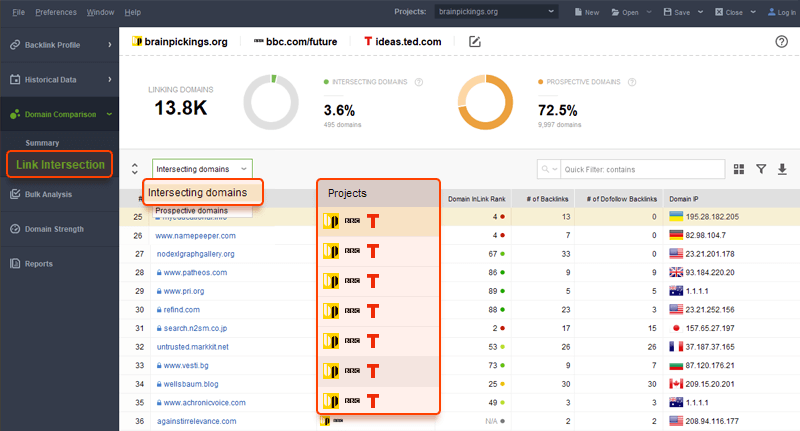
But by far the most important feature that is needed for proper competitor research is a list of your competitors’ intersecting links. Those are the linking domains that a few of your SEO competitors have in common, which link to a number of them but not to you yet. 

I prefer using SEO SpyGlass for this since I’m its developer and can vouch for its functionality. In the tool you’ll get to see all of the domains linking to your one or a number of your competitors, but not to you.

Using SEO SpyGlass tool for SEOcompetitor research of back links
If you find a certain source that links to two-to-four of your competitors in your niche, there’s a pretty high chance that you’ll also get an opportunity to partner with them if you do some outreach. 

Link building is just as vital for SEO as anything else, and doing it right can make or break any website’s ranking success. 

Monitor the opportunities presented by your competitor research and seize on them in your own SEO efforts.

Keep an eye on their backlink history

There’s another great angle to analyze your competitor’s pages. Try and look up when exactly your competitors received which backlinks for their content. 

If you see a sudden rise, that could mean, for example, that the page has been updated. Checking out the page itself you might see that your competitor has stumbled upon a viral topic that ranks very highly right on.

You can seize on that opportunity and update your existing content. Or, if you consciously didn’t cover a certain topic thinking that it would not be relevant, and you find that it’s now become viral, you can create some new material.

Conclusion

There are different tools that can be used to boost your SEO success. Getting into the top of Google’s organic search requires quite a lot of analysis, and work. 

Along with keyword and backlink research, link building and website audits, competition research is a fundamental part of a successful SEO campaign.

Aleh is the Founder and CMO at SEO PowerSuite and Awario. He can be found on Twitter at @ab80.

The post SEO competition research: The complete guide appeared first on Search Engine Watch.


from SEO – Search Engine Watch https://ift.tt/38e2WR9
via IFTTT

Mining Reddit for Content Ideas in 5 Steps - Whiteboard Friday

Posted by DanielRussell

For marketers, Reddit is more than a tool to while away your lunch break. It's a huge, thriving forum with subreddits devoted to almost any topic you can imagine — and exciting new content ideas lurk within threads, just waiting to be discovered. In this edition of Whiteboard Friday, Daniel Russell takes you through five simple steps to mine Reddit for content ideas bolstered by your target audience's interest.


Video Transcription

Howdy, Moz fans. Welcome to another edition of Whiteboard Friday. My name is Daniel Russell. I'm from an agency called Go Fish Digital. Today we're going to be talking about mining Reddit for content ideas.

Reddit, you've probably heard of it, but in case you haven't, it's one of the largest websites on the internet. It gets billions of views and clicks per year. People go there because it is a great source of content. It's really entertaining. But it also means that it's a great source of content for us as marketers. So today what we're going to be talking about is two main groups here.

We're going to first be talking about the features of Reddit, the different things that you can use on Reddit to find good content ideas. Then we're going to be talking about five steps that you can take and apply today to start finding ideas for your company, for your clients and start getting that successful content. 

Features of Reddit

So first, Reddit as a breakdown here.

Subreddits

First, a big feature of Reddit is called subreddits. They're essentially smaller forums within Reddit, a smaller forum within a forum dedicated to a particular topic. So there might be a forum dedicated to movies and discussing movies. There's a forum dedicated to food and talking about different types of food, posting pictures of food, posting recipes.

There is a forum for just about everything under the sun. If you can think of it, it's probably got a forum on Reddit. This is really valuable to us as marketers because it means that people are taking their interests and then putting it out there for us to see. So if we are trying to do work for a sports company or if we're trying to do work for our company that's dentistry or something like that, there is a subreddit dedicated to that topic, and we can go and find people that are interested in that, that are probably within our target markets.

Upvoting and downvoting

There's upvoting and downvoting. Essentially what this is, is people post a piece of content to Reddit, and then other users decide if they like it or not. They upvote it or they downvote it. The stuff that is upvoted is usually the good stuff. People that are paying really close attention to Reddit are always upvoting and downvoting things. Then the things that get the most upvotes start rising to the top so that other people can see it.

It's super valuable to us again because this helps verify ideas for us. This helps us see what's working and what's not. Before we even put pen to paper, before we even start designing everything, we can see what has been the most upvoted. The most upvoted stuff leads to the next big feature, which is rankings. The stuff that gets voted the most ends up ranking on the top of Reddit and becomes more visible.

It becomes easier for us to find as marketers, and luckily we can take a look at those rankings and see if any of that matches the content we're trying to create. 

Comments

There's the comments section. Essentially what this is, is for every post there's a section dedicated to that post for comments, where people can comment on the post. They can comment on comments. It's almost like a focus group.

It's like a focus group without actually being there in person. You can see what people like, what people don't like about the content, how they felt about it. Maybe they even have some content ideas of their own that they're sharing in there. It's an incredibly valuable place to be. We can take these different features and start digging in to find content ideas using these down here.

Reddit search & filters

Search bar

The search bar is a Reddit feature that works fairly well. It will probably yield mediocre results most of the time. But you can drill down a little further with that search bar using search parameters. These parameters are things like searching by author, searching by website.

Search parameters

There are a lot of different searches that you can use. There's a full list of them on Reddit. But this essentially allows you to take that mediocre search bar and make it a little bit more powerful. If you want to look for sports content, you can look specifically at content posted from ESPN.com and see what has been the most upvoted there. 

Restrict results to subreddit

You can restrict your results to a particular subreddit. So if you're trying to look for content around chicken dishes, you're doing work for a restaurant and you're trying to find what's been the most upvoted content around chicken, you don't want people calling each other chickens. So what you can do is restrict your search to a subreddit so that you actually get chicken the food rather than posts talking about that guy is a chicken.

Filter results

You can filter results. This essentially means that you can take all the results that you get from your search and then you can recategorize it based off of how many upvotes it's gotten, how recently it was posted, how many comments it has. 

Filter subreddits

Then you can also filter subreddits themselves. So you can take subreddits, all the content that's been posted there, and you can look at what's been the most upvoted content for that subreddit.

What has been the most controversial content from that subreddit? What's been the most upvoted? What's been the most downvoted? These features make it a really user-friendly place in terms of finding really entertaining stuff. That's why Reddit is often like a black hole of productivity. You can get lost down it and stay there for hours.

That works in our benefit as marketers. That means that we can go through, take these different features, apply them to our own marketing needs, and find those really good content ideas. 

5 steps to finding content ideas on Reddit

So for some examples here. There's a set of key steps that you can use. I'm going to use some real-world examples, so some true-blue things that we've done for clients so that you can see how this actually works in real life.

1. Do a general search for your topic

The first step is to do a general search for your topic. So real-world example, we have a client that is in the transportation space. They work with shuttles, with limos, and with taxis. We wanted to create some content around limos. So the way we started in these key steps is we did a general search for limos.

Our search yielded some interesting things. We saw that a lot of people were posting pictures of stretch limos, of just wild limo interiors. But then we also saw a lot of people talking about presidential limos, the limos that the president rides in that have the bulletproof glass and everything. So we started noticing that, hey, there's some good content here about limos. It kind of helped frame our brainstorming and our content mining. 

2. Find a subreddit that fits

The next step is to find a subreddit that fits that particular topic. Now there is a subreddit dedicated to limos. It's not the most active. There wasn't a ton of content there. So what we ended up doing was looking at more broad subreddits. We looked at like the cars subreddit.

There was a subreddit dedicated to guides and to breakdowns of different machines. So there were a lot of breakdowns, like cutaways of the presidential limos. So again, that was coming up. What we saw in the general search was coming up in our subreddit specific search. We were seeing presidential limos again.

3. Look at subreddit content from the past month

Step 3, look at that sub's particular content from the past month. The subreddit, for example, that we were looking at was one dedicated to automobiles, as I had mentioned earlier. We looked at the top content from that past month, and we saw there was this really cool GIF that essentially took the Chevy logo back from like the '30s and slowly morphed it over the years into the Chevy logo that we saw today.

We thought that was pretty cool. We started wondering if maybe we could apply that same kind of idea to our presidential limo finding that we were seeing earlier. 

4. Identify trends, patterns, and sticky ideas

Number 4 was to identify trends, patterns, and sticky ideas. Sticky ideas, it just means if you come across something and it just kind of sticks in your head, like it just kind of stays there, likely that will happen for your audience as well.

So if you come across anything that you find really interesting, that keeps sticking in your head or keeps popping up on Reddit, it keeps getting lots of upvotes, identify that idea because it's going to be valuable. So for us, we started identifying ideas like morphing GIFs, the Chevy logo morphing over time. We started identifying ideas like presidential limos. People really like talking about it.

5. Polish, improve, and up-level the ideas you've found

That led us to use Step Number 5, which is to take those ideas that we were finding, polish them, improve them, one up it, take it to the next level, and then create some content around that and promote it. So what we did was we took those two ideas, we took presidential limos and the whole morphing GIF idea over time, and we combined them.


We found images of all of the presidential limos since like the '50s. Then we took each of those presidential limos and we created a morphing GIF out of them, so that you started with the old presidential limos, which really weren't really secure. They were convertibles. They were normal cars. Then that slowly morphed up to the massive tanks that we have today. It was a huge success.

It was just a GIF. But that idea had been validated because we were looking at what was the most upvoted, what was the most downvoted, what was ranked, what wasn't ranked, and we saw some ideas that we could take, one up, and polish. So we created this morphing presidential limo, and it did really well.

It got coverage in a lot of major news networks. ABC News picked it up. CBS talked about it. It even got posted to Reddit later and performed really well on Reddit. It was all because we were able to take these features, mine down, drill down, find those good content ideas, and then polish it and make it our own. 

I'm really interested to hear if you've tried this before. Maybe you've seen some really good ideas that you'd like to try out on Reddit.

Do you have like a favorite search function that you use on Reddit? Do you like to filter by the past year? Do you like a particular subreddit? Let me know down in the comments. Good luck mining ideas. I know it will work for you. Have a great day.

Video transcription by Speechpad.com


Sign up for The Moz Top 10, a semimonthly mailer updating you on the top ten hottest pieces of SEO news, tips, and rad links uncovered by the Moz team. Think of it as your exclusive digest of stuff you don't have time to hunt down but want to read!


from The Moz Blog https://ift.tt/2NBMwdr
via IFTTT

Thursday, 16 January 2020

Boost SEO teamwork through unexpected collaborations

SEO plays a role in the success of most online businesses, but it’s kept in a silo. SEO focuses on organic traffic online, while other strategies operate independently around it. What happens when you break down the silos and start working SEO into other company functions?

The ‘Rule of 7‘ suggests that people need to see your messages at least seven times before they start to take notice of your brand. By combining your SEO efforts with ongoing marketing, advertising, and other activities, you can start to accelerate the number of times and channels by which people are seeing your messaging.

SEM collaborations

SEO and SEM are really just two sides to the same coin. SEO focuses specifically on monitoring and improving organic traffic to your website while SEM has a broad focus on improving conversions through mostly paid strategies. Many companies consider these two activities different enough to keep them separate, a strategy that makes sense when you look at the individual functions that differ from SEO and SEM.

However, when SEO and SEM are collaborating, you can often get better results for both departments. Both activities rely heavily on targeting keywords to draw in more people. By sharing keyword data and insights, both departments can work on targeting and optimizing for the best keywords and phrases, creating a more unified approach that puts content and ads in front of the same audience consistently.

When a website is well optimized, it can improve the results of SEM campaigns. Good SEO practices help Google and other search engines to consider your site as a legitimate source of information. This is good for your organic search placement, but also for your ad placements since search engines are more likely to promote more credible websites.

SEM is also vital during the early stages of an SEO campaign. By using PPC ads as you work on your SEO for a new website, you can start getting more traffic and legitimacy that may speed up your long-term SEO results and help you reach your goals faster.

CRM collaborations

If you’re using a CRM (customer relationship management) software, you can have a powerful impact on your SEO by utilizing the system to complement ongoing SEO activities. The three most distinct benefits of this collaboration are:

1. Insights about other companies your customers use

CRM systems can help point you toward other services or companies that your customers engage with on a regular basis. With this knowledge, you can approach those companies for guest posts or content collaborations. You’re more likely to get a “yes” if you can show the other company how your customers are related and the value you can offer that’s complementary to what they already offer.

The more relevant, high-quality links you’re getting, the better the results you can expect from your link building strategy.

2. Keyword insights related to holistic customer experiences

SEO analytics are great for showing you where customers can from and which keywords they searched to find you. But what happens if that customer took an unconventional journey?

CRM software is better at tracking the full customer journey, allowing you to gain some insight into the circumstances that brought a person to your website. You’ll be able to see when and where they engaged with you, along with keywords and phrases that may have influenced them along the way.

3. Unified content on all platforms

CRM systems let you see what’s going on all around so you can see how well your messages are mashing up. Whether you’re hosting expert webinar presentations, publishing a series of blogs about a relevant topic, or posting short social media videos, you’ll be able to see how these things are impacting your customers positively or negatively.

Having more data is necessary for successful SEO. You need to know what’s working, where, and why. CRM lets your SEO team draw from more complete data while ensuring that every outgoing message lines up with your ongoing SEO strategy.

SMM collaborations

If you’re not already combining SEO and social media marketing (SMM) activities, it’s time to catch up. Social media isn’t a good place to worry about keywords and typical SEO strategies, but it’s a very complimentary service that can drive a large amount of traffic to your website directly or to the search engine to look for you.

Messaging and brand voice displayed on social media should match that on other platforms and throughout your content marketing. Social media is a unique platform that’s more informal and comfortable for people wanting to interact with your business. While SMM doesn’t directly impact your rankings, it has an enormous indirect benefit and helps get your content in front of more people, resulting in more backlinks, more engagement, and higher traffic numbers overall.

Give your SMM team guidelines about how to effectively promote your SEO optimized content. SEO teams should make it incredibly easy to share content on social media (high-quality images, easy quotes or snippets, and the works). They should include social media features integrated into the website itself, while SMM teams should put in the work to make sure SEO content is getting out in front of their audience when it’s appropriate. In this way, both teams can help each other succeed.

Marketing collaborations

Traditional marketing has very little overlap with SEO. Since traditional marketing is more concerned with marketing that makes sense in the real world, rather than on the internet, it’s a completely different type of marketing. However, there is an important point of overlap that shouldn’t be ignored. Both marketing and SEO work with specific customer data, refining your brand messages and outreach based on who and how you’re reaching the most people.

Marketing is concerned with knowing as much about your customers or potential customers as possible. If you have a marketing focus that’s not exclusively limited to online marketing, it’s still important to combine these two departments to allow them to share their data back and forth.

The goal of collaborating

At the end of the day, you want to present a unified brand image that gives people the right impressions no matter how they access your brand. Your messaging may vary from platform to platform, but your brand voice should always be the same. All your teams should be working together to reach the same broad company goals and milestones.

When you start from the top and work your SEO strategy into every facet of your business, it’s easier to accomplish or even surpass your goals.

The post Boost SEO teamwork through unexpected collaborations appeared first on Search Engine Watch.


from SEO – Search Engine Watch https://ift.tt/2RlkYdj
via IFTTT

Wednesday, 15 January 2020

What Do High-Performance E-Commerce Websites Do Differently? Results from the 2020 KPI Study

Posted by Alan_Coleman

Hello Moz readers,

We’re proud to bring some insights from the Wolfgang E-Commerce KPI Study 2020.

The annual study provides KPI benchmark data which allow digital marketers analyze their 2019 performance and plan their 2020. The most popular section in the report amongst Moz readers has always been the conversion correlation, where we crunch the numbers to see what sets the high-performing websites apart.

We're privileged to count a number of particularly high-performance websites among our dataset participants. There have been over twenty international digital marketing awards won by a spread of participant websites in the last three years. In these findings, you're getting insights from the global top tier of campaigns.

If we take a five-year look-back, we can see the conversion correlation section acts as an accurate predictor of upcoming trends in digital marketing.

In our 2016 study, the two stand-out correlations with conversion rate were:

  1. High-performing websites got more significantly paid search traffic than the chasing pack.
  2. High-performing websites got significantly more mobile traffic than the chasing pack.

The two strongest overall trends in our 2020 report are:

  1. It’s the first year in which paid search has eclipsed organic for website revenue.
  2. It’s the first year the majority of revenue has come from mobile devices.

This tells us that the majority of websites have now caught up with what the top-performing websites were doing five years ago.

So, what are the top performing websites doing differently now?

These points of differentiation are likely to become the major shifts in the online marketing mix over the next 5 years.

Let’s count down to the strongest correlation in the study:

4. Race back up to the top! Online PR and display deliver conversions

For the majority of the 2010s, marketers were racing to the bottom of the purchase funnel. More and more budget flowed to search to win exposure to the cherished searcher — that person pounding on their keyboard with their credit card between their teeth, drunk on the newfound novelty of online shopping. The only advertising that performed better than search was remarketing, which inched the advertising closer and closer to that precious purchase moment. 

Now in 2020, these essential elements of the marketing mix are operating at maximum capacity for any advertiser worth their salt. Top performing websites are now focusing extra budget back up towards the top of the funnel. The best way to kill the competition on Search is to have the audience’s first search, be your brand. Outmarket your competition by generating more of your cheapest and best converting traffic, luvly brand traffic. We saw correlations with Average Order Value from websites that got higher than average referral traffic (0.34) and I can’t believe I’m going to write this, but display correlated with a conversion success metric, Average Order Value (0.37). I guess there's a first time for everything!

3. Efficiencies of scale

Every budding business student knows that when volume increases, cost per unit decreases. It’s called economies of scale. But what do you call it when it’s revenue per unit that’s increasing with volume? At Wolfgang, we call it efficiencies of scale. Similar to last year’s report, one of the strongest correlations against a number of the success metrics was simply the number of sessions. More visitors to the site equals a higher conversion rate per user (0.49). This stat summons the final wag for the long-tail of smaller specialist retailers. This finding is consistent across both the retail and travel sectors.

And it illustrates another reversal of a significant trend in the 2010s. The long-tail of retailers were the early settlers in the e-commerce land of plenty. Very specialist websites with a narrow product range could capture high volumes of traffic and sales.

For example, www.outboardengines.com could dominate the SERP and then affiliate link or dropship product, making for a highly profitable small business. The entrepreneur behind this microbusiness could automate the process and replicate the model again and again for the products of her choosing. Timothy Ferris’ book, The 4 Hour Work Week, became the bible to the first flush of digital nomads; affiliate conferences in Vegas saw leaning towers of chips being pushed around by solopreneur digital marketers with wild abandon.

Alas, by the end of the decade, Google had started to prioritize brands in the SERP, and the big players had finally gotten their online act together. As a result, we are now seeing significant ‘efficiencies of scale’ as described above

2. Attract that user back

What’s the key insight digital marketers need to act upon to succeed in the 2020s? Average Sessions per Visitor is 2, Average Sessions per Purchaser is 5.

In other words, the core role of the marketer is to create an elegant journey across touchpoints to deliver a person from two click prospect to five click purchaser. Any activity which increases sessions per visitor will increase conversion. Similar to last year’s report, another of the strongest and most consistent correlations was the number of Sessions per User (0.7) — which emphasizes the importance of this metric.

So where should a marketer seek these extra interactions?

Check out the strongest correlation we found with conversion success in the Wolfgang KPI Report 2020….

1. The social transaction

The three strongest conversion correlations across the 4,000 datapoints were related to social transactions. This tells us that the very top performing websites were significantly better than everybody else at generating traffic from social that purchases.

Google Analytics is astonishingly rigorous at suppressing social media success stats. It appears they would rather have an inferior analytics product than accurately track cross-device conversions and give social its due. They can track cross-device conversions in Google Ads — why not in Analytics? So, if our Google Analytics data is telling us social is the strongest conversion success factor, we need to take notice.

This finding runs in parallel with recent research by Forrester which finds one-third of CMOs still don’t know what to do with social.

Our correlation calc finds that social is the biggest point of difference between the high flyers and the chasing pack. The marketers who do know how to use social, are the tip top performing marketers of the bunch. We also have further findings on how to out-market the competition on social in the full study.

Here’s the top tier of correlations we extracted from a third of a billion euro in online revenues and over 100 million website visits:

Retail

A screenshot of a cell phone Description automatically generated

Travel

A screenshot of a cell phone Description automatically generated

Overall

A screenshot of a cell phone Description automatically generated

To read more of our findings pertaining to:

  • The social sweet spot
  • Average conversion rates in your industry
  • In-store sales benchmarked
  • Why data is the new oil
  • 2010 was the decade of the…
  • And much, much more

Have a look at the full e-commerce KPI report for 2020. If you found yourself with any questions or anecdotes relating to the data shared here, please let us know in the comments!


Sign up for The Moz Top 10, a semimonthly mailer updating you on the top ten hottest pieces of SEO news, tips, and rad links uncovered by the Moz team. Think of it as your exclusive digest of stuff you don't have time to hunt down but want to read!


from The Moz Blog https://ift.tt/2TlBKMd
via IFTTT

Tuesday, 14 January 2020

Anchor text variations: Your key to link profile diversity

Anchor text variation is one of the best ways to tell Google what a specific web page is about. It is used to help readers find more information about a topic and also factors into ranking your web pages. While it is a great tool, it can be the downfall of your SEO efforts if not used correctly. 

Many people have tried (and are still trying) to manipulate search results. One way to do this is to link from specific anchor text in an attempt to rank for the specific word or phrase. Unfortunately for these folks but fortunately for those of us doing it right, we are no longer in the olden days of SEO and these types of black-hat techniques no longer work. In fact, they are likely to get you penalized. 

One of the best ways to stay out of a penalty is by practicing link diversity. There are many ways to do this – you could try linking from various domain extensions, different domain authorities, and using a mixture of “follow” and “nofollow” links. For the sake of this article, however, I want to focus specifically on varying anchor text. 

Why vary your anchor text?

Because. Google…

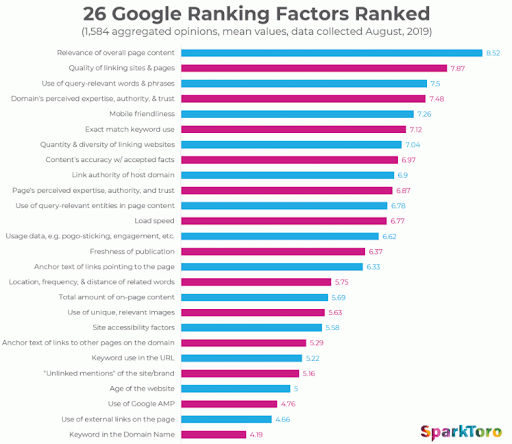
That’s the simple answer, but let’s go a little more in-depth. Google looks at your link profile when deciding how to rank your web pages. Part of your link profile involves the anchor text used to link to your website. 

Google's list of ranking factors

Source: SparkToro

So, you should have specific anchor text that talks about your web pages, right? Well, sort of.

Using specific anchor text is fine, but when you start to use the same anchor text, Google will get suspicious. It will make your backlink profile look unnatural and likely lead to lower search rankings, if not a Google penalty. 

When linking to your website, you need to vary the anchor text. Natural links will come from various anchor texts as webmasters link differently. There is no way all websites got together and decided to link to your website from the exact same anchor text. Google knows this, which is why you will be going down the road of a Google penalty if you don’t incorporate diversity. 

Using long-tail in your anchor text variations

So, how do you choose anchor text variations? There are many ways to do this, but I will show you some that will keep the meaning of your anchor text to best help with SEO. The first is mixing in long-tail keywords with your exact match anchor text. 

Example

Let’s use the keyword phrase “anchor text” as our example. Instead of linking from that exact phrase, use the following long-tail variations:

  • “using variations of anchor text in your backlink profile”
  • “how to vary your anchor text for better link diversity”
  • “how anchor text variations matter in your link profile”

I just made those up, but you can see how we use the exact match keyword within a long-tail anchor text. Google will still see the main anchor text and take that into account, but you also have a variation so as to show a natural link profile (and not artificial link building). 

Using LSI Keywords

The above examples I just made up on the fly, but you can get more technical if you want to vary your anchor text and ensure you keep the meaning of the term you are trying to rank for. What do I mean by that?

Sometimes people simply choose anchor text variations that they think are similar. While they may be similar in wording, they may not be similar in meaning. And yes, it makes a difference. The term “anchor text variation” and “exact match anchor text” contain the same keyword, but they will return very different results when you search Google. 

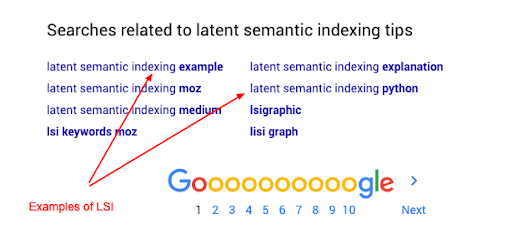
Example of using LSI for anchor text variations

Source: Google Search

That is where LSI keywords come into play. LSI stands for latent semantic indexing and is a term used to describe keywords that Google feels are similar to each other. And hey, if Google says they are similar, then they are (since Google is the one who determines where they rank). 

You can find LSI keywords in a number of ways. Use an online LSI keyword generator or go to your Google AdWords account and search for specific keyword variations in your ad campaign. You can also simply Google your main term and then look at the bottom of the page for similar searches suggested by Google. 

Using the last suggestion mentioned above, I found the following LSI keywords for “anchor text variation”:

  • “how to create anchor text”
  • “anchor text best practices”
  • “anchor text generator”

This means you can use all three of these to link to the same webpage and Google will see them as the same or similar, without penalizing you for using the “exact” same anchor text. Make sense?

Final word on anchor text variation

There are a number of techniques and strategies available to you when it comes to SEO, but building a diverse link profile is one of the highest impacts. Even within the context of diversifying your anchor text, there are multiple strategies, as you can see. For example, you can add advice such as isolating your current anchor text structure to ensure it is diverse. Without going too far and adding a layer of confusion, however, I think you get the main point which is you must vary your anchor text. By doing so you are creating a diverse link profile that will show Google your links are coming naturally, and you aren’t involved in any link building schemes. 

What variations have you used for anchor text diversity?  

Anthony Gaenzle is the Founder of AnthonyGaenzle.com a marketing and business blog. He also serves as the Head of Marketing and Business Development at Granite Creative Group, a full-service marketing firm.

The post Anchor text variations: Your key to link profile diversity appeared first on Search Engine Watch.


from SEO – Search Engine Watch https://ift.tt/2u2SdKn
via IFTTT

Social Media Today