Innovate not imitate!

Innovate not imitate!
Interested in the latest Growth hacks?

Welcome to our blog

Interested in the latest Growth hacks?

Welcome to our blog!

We want to help you start/manage and grow your business using innovative strategies and implementation. We have a passion for helping businesses and companies of various sizes see the same success that we have achieved.

Our skillsets are wide and varied, from business strategy, marketing, to online strategy. An increasing number of companies are turning to the internet and online media as a means to maximising their marketing reach and exposure. This is special area of focus for us and we do more than simple SEO strategies.

See our website for more: www.innovatetoaccelerate.com

Friday, 11 May 2018

Google & JavaScript: Googlebot’s Indexing Can Miss Metadata, Canonicals & Status Codes

At Google I/O yesterday, Google detailed some issues surrounding the use of JavaScript when it comes to both crawling and indexing content.  One thing they revealed is that Googlebot will process JavaScript heavy pages in two phases – an initial crawl, and then a second one a few days later that will render the JavaScript […]

The post Google & JavaScript: Googlebot’s Indexing Can Miss Metadata, Canonicals & Status Codes appeared first on The SEM Post.


from The SEM Post https://ift.tt/2rF35to
https://ift.tt/eA8V8J via IFTTT

Google Indexes and Ranks JavaScript Pages in Two Waves Days Apart

Tom Greenaway from Google spoke at Google I/O yesterday about how Google handles JavaScript pages, and he mentioned something pretty significant – Googlebot treats indexing and ranking of JavaScript pages much differently than non-Javascript rendered pages. More specifically, when Googlebot crawls JavaScript sites, it does so in waves.  And the result is it will have […]

The post Google Indexes and Ranks JavaScript Pages in Two Waves Days Apart appeared first on The SEM Post.


from The SEM Post https://ift.tt/2rAmAnH
https://ift.tt/eA8V8J via IFTTT

Google: Types of Links That Googlebot Will & Will Not Follow

At Google I/O yesterday, Google clarified the types of links that Googlebot will follow.  While “a href” is the standard link type, they also covered various other link types and whether Googlebot would follow them or not. In particular, they clarify some uses of the JavaScript onclick attribute within links and which ones Googlebot will […]

The post Google: Types of Links That Googlebot Will & Will Not Follow appeared first on The SEM Post.


from The SEM Post https://ift.tt/2ryBAlQ
https://ift.tt/eA8V8J via IFTTT

Googlebot Still Uses Older Chrome 41 for Rendering

At yesterday’s Google I/O John Mueller revealed that Google is still using the older version of Chrome – Chrome 41 – for their official rendering by Googlebot.  This means that some newer coding features available in the newer versions of Chrome and other browsers won’t be rendered properly by Googlebot. What’s not immediately clear from […]

The post Googlebot Still Uses Older Chrome 41 for Rendering appeared first on The SEM Post.


from The SEM Post https://ift.tt/2jNELSk
https://ift.tt/eA8V8J via IFTTT

Monitoring Featured Snippets - Whiteboard Friday

Posted by BritneyMuller

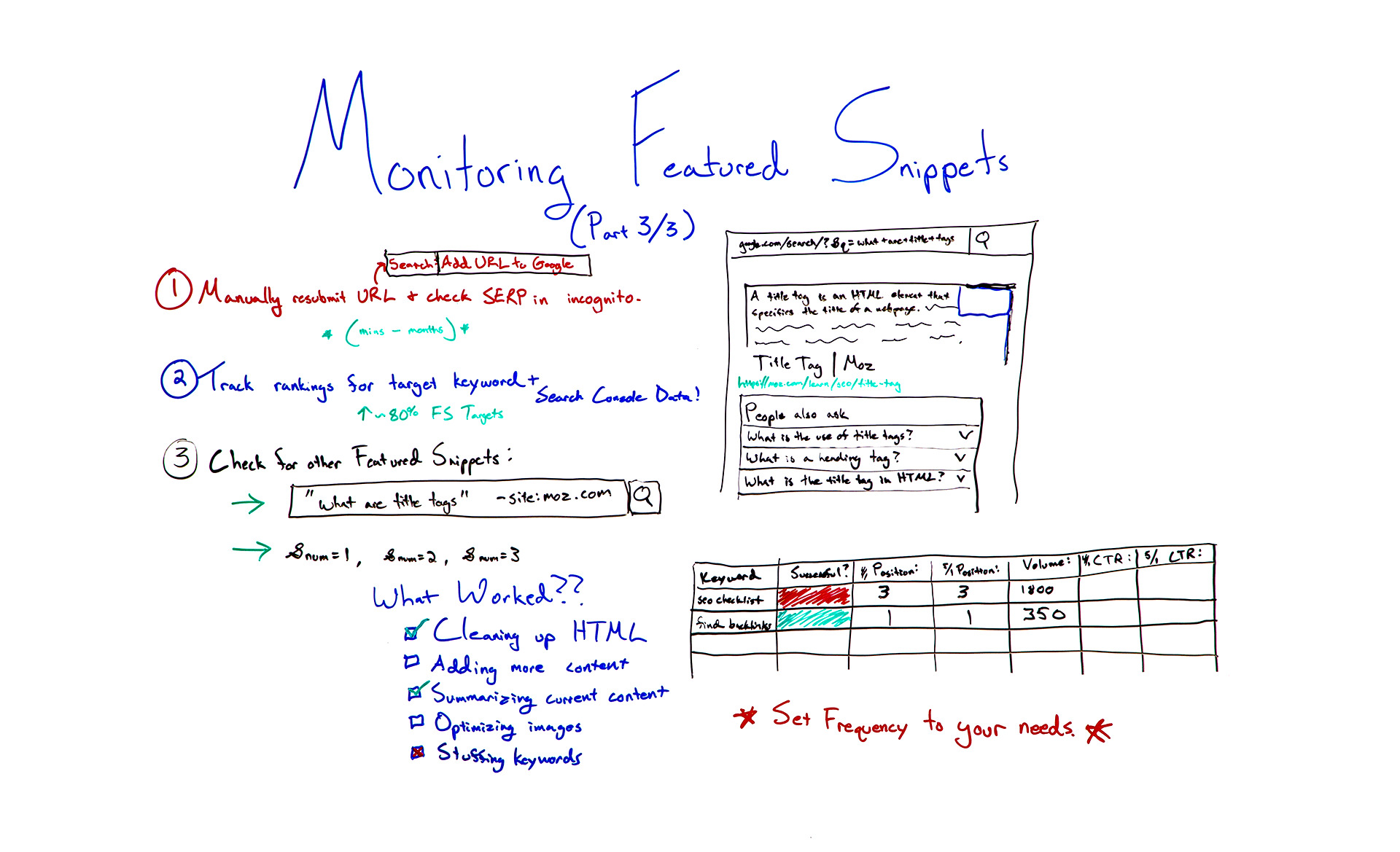
We've covered finding featured snippet opportunities. We've covered the process of targeting featured snippets you want to win. Now it's time for the third and final piece of the puzzle: how to monitor and measure the effectiveness of all your efforts thus far. In this episode of Whiteboard Friday, Britney shares three pro tips on how to make sure your featured snippet strategy is working.

Monitoring featured snippets

Click on the whiteboard image above to open a high-resolution version in a new tab!

Video Transcription

Hey, Moz fans. Welcome to another edition of Whiteboard Friday. Today we are going over part three of our three-part series all about featured snippets. So part one was about how to discover those featured snippet opportunities, part two was about how to target those, and this final one is how to properly monitor and measure the effectiveness of your targeting.

So we'll jump right in. So there are a couple different steps and things you can do to go through this.

I. Manually resubmit URL and check SERP in incognito

First is just to manually resubmit a URL after you have tweaked that page to target that featured snippet. Super easy to do. All you do is go to Google and you type in "add URL to Google." You will see a box pop up where you can submit that URL. You can also go through Search Console and submit it manually there. But this just sort of helps Google to crawl it a little faster and hopefully get it reprioritized to, potentially, a featured snippet.

From there, you can start to check for the keyword in an incognito window. So, in Chrome, you go to File > New Incognito. It tends to be a little bit more unbiased than your regular browser page when you're doing a search. So this way, you'd start to get an idea of whether or not you're moving up in that search result. So this can be anywhere from, I kid you not, a couple of minutes to months.

So Google tends to test different featured snippets over a long period of time, but occasionally I've had experience and I know a lot of you watching have had different experiences where you submit that URL to Google and boom — you're in that featured snippet. So it really just depends, but you can keep an eye on things this way.

II. Track rankings for target keyword and Search Console data!

But you also want to keep in mind that you want to start also tracking for rankings for your target keyword as well as Search Console data. So what does that click-through rate look like? How are the impressions? Is there an upward trend in you trying to target that snippet?

So, in my test set, I have seen an average of around 80% increase in those keywords, just in rankings alone. So that's a good sign that we're improving these pages and hopefully helping to get us more featured snippets.

III. Check for other featured snippets

Then this last kind of pro tip here is to check for other instances of featured snippets. This is a really fun thing to do. So if you do just a basic search for "what are title tags," you're going to see Moz in the featured snippet. Then if you do "what are title tags" and then you do a -site:Moz.com, you're going to see another featured snippet that Google is pulling is from a different page, that is not on Moz.com. So really interesting to sort of evaluate the types of content that they are testing and pulling for featured snippets.

Another trick that you can do is to append this ampersand, &num=1, &num=2 and so forth. What this is doing is you put this at the end of your Google URL for a search. So, typically, you do a search for "what are title tags," and you're going to see Google.com/search/? that typical markup. You can do a close-up on this, and then you're just going to append it to pull in only three results, only two results, only four results, or else you can go longer and you can see if Google is pulling different featured snippets from that different quota of results. It's really, really interesting, and you start to see what they're testing and all that great stuff. So definitely play around with these two hacks right here.


Then lastly, you really just want to set the frequency of your monitoring to meet your needs. So hopefully, you have all of this information in a spreadsheet somewhere. You might have the keywords that you're targeting as well as are they successful yet, yes or no. What's the position? Is that going up or down?

Then you can start to prioritize. If you're doing hundreds, you're trying to target hundreds of featured snippets, maybe you check the really, really important ones once a week. Some of the others maybe are monthly checks.

From there, you really just need to keep track of, "Okay, well, what did I do to make that change? What was the improvement to that page to get it in the featured snippet?" That's where you also want to keep detailed notes on what's working for you and in your space and what's not.

So I hope this helps. I look forward to hearing all of your featured snippet targeting stories. I've gotten some really awesome emails and look forward to hearing more about your journey down below in the comments. Feel free to ask me any questions and I look forward to seeing you on our next edition of Whiteboard Friday. Thanks.

Video transcription by Speechpad.com


Sign up for The Moz Top 10, a semimonthly mailer updating you on the top ten hottest pieces of SEO news, tips, and rad links uncovered by the Moz team. Think of it as your exclusive digest of stuff you don't have time to hunt down but want to read!


from The Moz Blog https://ift.tt/2G9naxa
via IFTTT

Thursday, 10 May 2018

Google Testing Product Listing Ad Carousels With 30 Products on Mobile

By default, Google’s Product Listing Ads have 10 or less products in their mobile carousels.  While we have seen them play with having two carousels, one on top of the other, most product carousels are still fairly limited in the number of products. Google is testing a new version of their Product Listing Ads Carousel […]

The post Google Testing Product Listing Ad Carousels With 30 Products on Mobile appeared first on The SEM Post.


from The SEM Post https://ift.tt/2KQugde
https://ift.tt/eA8V8J via IFTTT

Ten SEO aspects for web designers to master

Web design isn’t just about aesthetics; it’s about how a site is put together under the hood. Design choices can have a big impact – positive or negative – on a site’s SEO. In turn, this can affect the site’s performance over its entire lifetime.

If you’re a professional web designer (or if you’re creating your own site from scratch), it’s important to know a few SEO basics – a little knowledge goes a long way to building sites that reach their intended audience. Understanding these 10 aspects of SEO will help you design sites that work well, in addition to looking great.

1. Site structure

Every site should be designed with a clear, logical structure in mind. The homepage should state the big picture purpose of the site – its reason for existing – and details should be broken down into subpages.

For example, if you’re designing a website for recipes, the home page could lead to separate category pages for dinners, soups, and desserts. Each of those subpages could then lead to individual recipe subpages of their own.

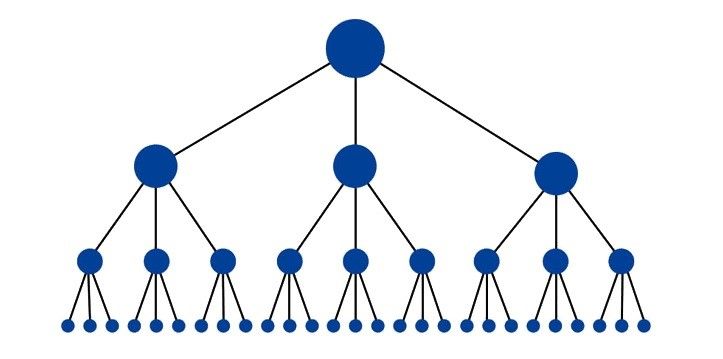
It’s fine to have several ‘layers’ of subpages on your site, but don’t go too deep or Google might have trouble crawling all of them. In general, try to keep your site’s depth to three or four layers. Here’s a visual from Moz of what a well-structured site looks like:
website structure

A site’s homepage should lead to its subpages, which lead to their own subpages, and so on.


2. URL structure

URLs affect a site’s SEO, so it’s important to choose good ones right from the start. Here are a few best practices to follow for URLs:

  • Shorter is better, since shorter URLs are more memorable than longer ones
  • A URL should describe the content of the page as clearly as possible. Use plain English instead of abbreviations or strings of letters and numbers
  • For subpages, use hyphens to break up words for readability. For example, use https://ift.tt/2KdqA43 instead of https://ift.tt/2rxZZYG.
  • Include keywords in URLs whenever it seems natural to do so (but avoid keyword stuffing).

3. Site navigation

In addition to being well-structured, your sites should be easy for visitors (and Google) to navigate. A site menu should be located prominently at the top of the page or along the sidebar. Every page on the site should be findable. Avoid creating ‘orphaned pages’ that aren’t linked from any other pages on the site. If visitors can’t find a page by following links, search engines won’t know that page exists either.

4. Mobile-friendly design

The age of mobile is here, and responsive web design isn’t optional anymore. For a site to provide good UX and rank well, it needs to adjust for comfortable viewing on a small screen. If you haven’t already, make responsive design your default design mode. You can easily test the mobile-friendliness of your sites using this simple tool from Google.

5. Site speed

Along with mobile-friendliness, site speed is another UX consideration that affects SEO. Google penalizes slow sites in their rankings, and visitors are less likely to stick around if a page takes a few seconds to load. Google’s PageSpeed Insights tool can tell you how fast your sites are and what you can adjust to make them faster.

6. Titles, headers and meta descriptions

Titles, headers and meta descriptions are important aspects of on-page SEO. Every page on a site should have unique content in its <title> tag – in other words, don’t copy and paste the same title across your whole site. Each page’s title should include at least one keyword that’s relevant to the content on the page. Likewise, include keywords in the header tags on each page, especially the <h1> tag.

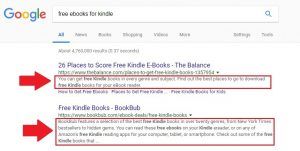
Meta descriptions – the blurbs that appear under links in SERPs – are a little different. They don’t directly affect SEO, but they do impact how many people click on your site in SERPs. They’re basically free advertising space, so put some thought into them, and include your main keywords to catch searchers’ eyes.
meta descriptions in Google

A couple examples of meta descriptions in Google.

7. Image optimization

Search engines cannot ‘read’ and understand images (yet), but you can tell them what your images are and what they refer to. Here are a few things you can do to optimize your images for SEO:

  • Name your images accurately. For example, it’s better to call an image something like png than img238.png
  • Use alt tags with your images. This is a good idea for accessibility purposes, but also tells search engines what your images depict
  • Don’t use bigger images than necessary as this can slow your site’s loading time.

8. Use of Flash

In general, steer clear of Flash unless it is absolutely essential. Search engines can’t see or process Flash content, so for SEO purposes it doesn’t exist. It’s especially important not to use Flash for important parts of your site, such as the navigation bar and the main text on your pages.

9. Structured data

The jury is still out on whether structured data, such as schema markup, gives sites a boost in search engines. However, it can help to bring more high-quality traffic by providing valuable information to human searchers. Over time, this traffic boost can improve your rankings.

structured data in Google

An example of how structured data shows up in Google’s results.

10. Site interface

Good SEO isn’t just about technical details; it’s also about helping people and providing great UX. While it’s important to pay attention to everything on this list as you work on a site, don’t let great design itself fall by the wayside – especially if you’re creating your own website with a free website builder. An attractive, easy-to-use interface will encourage visitors to stay on your site and make it easier for them to find what they need. This helps to keep your bounce rate down. An attractive site is great for a brand’s image, too.

Wrapping up

SEO isn’t the niche specialty it used to be. Search engines are playing an increasingly important role in the future of the internet, and it’s important for people in other tech fields – such as web design – to be able to keep up. If you design your site with these crucial aspects of SEO in mind, the finished product will be both beautiful and functional.

Want to add something to this list? Share your SEO tips for web designers in the comments below.


from SEO – Search Engine Watch https://ift.tt/2wtj7fj
via IFTTT

Social Media Today